


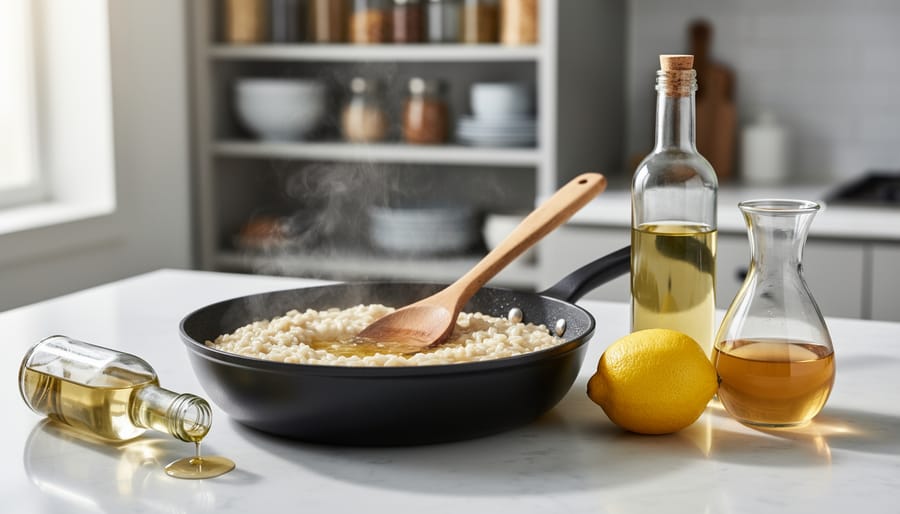
You’re halfway through preparing a delicious risotto or pan sauce when you realize the bottle of white wine you thought was in the pantry isn’t there. Don’t panic. Swapping white wine in recipes is simpler than you might think, and the results can be just as flavorful when you understand what role the wine plays in your dish.
White wine brings three essential elements to cooking: acidity to brighten flavors and tenderize proteins, depth through subtle fruit and mineral notes, and liquid to deglaze pans and create sauces. The best substitutes mirror one or more of these qualities. White wine vinegar diluted with water (one part vinegar to two parts water) replicates acidity beautifully for deglazing or finishing sauces. Dry vermouth actually works even better than wine in many cases since it’s fortified and shelf-stable, offering similar herbal complexity. Chicken or vegetable broth with a splash of lemon juice provides body and brightness for risottos and braises. Apple cider or white grape juice mixed with a teaspoon of vinegar delivers fruity sweetness for cream-based dishes.
The ratio matters less than matching the wine’s function in your specific recipe. A seafood piccata needs that sharp, acidic punch, while a cream sauce benefits from something milder that won’t curdle dairy. Even experienced home cooks who appreciate wine’s nuanced contribution to food often keep these alternatives on hand for convenience.
This guide breaks down exactly which substitute works best for different cooking scenarios, complete with measurements and practical tips you can apply tonight.
Before you grab a substitute, it helps to know exactly what white wine brings to a recipe. That splash of Sauvignon Blanc or Pinot Grigio does more than add a boozy note, it fundamentally changes how your dish tastes and feels.
First, acidity. White wine typically ranges from pH 3.0 to 3.5, which brightens flavors the same way a squeeze of lemon does. That tartness cuts through rich ingredients like butter or cream, preventing dishes from tasting flat or heavy. When you deglaze a pan with wine, that acidity also helps lift browned bits (fond) from the bottom, the foundation of any good pan sauce.
Second, flavor complexity. Wine contains hundreds of aromatic compounds from fermentation and aging. You’re not just adding grape juice; you’re layering in subtle fruit notes, herbal undertones, and mineral hints that work quietly in the background. A seafood risotto gets depth from wine’s natural umami compounds, while chicken piccata benefits from floral esters that complement lemon and capers.
Third, deglazing power. When wine hits a hot pan, its alcohol (which cooks off quickly) and water content work together to dissolve those caramelized proteins stuck to the surface. This creates a flavorful base liquid that becomes your sauce. The alcohol itself also acts as a solvent, extracting fat-soluble flavors from herbs and aromatics that water alone can’t release, which is why wine helps flavor and deglaze more effectively than plain stock.
Understanding these three functions means you can target exactly what your recipe needs from its substitute, rather than randomly swapping ingredients and hoping for the best.
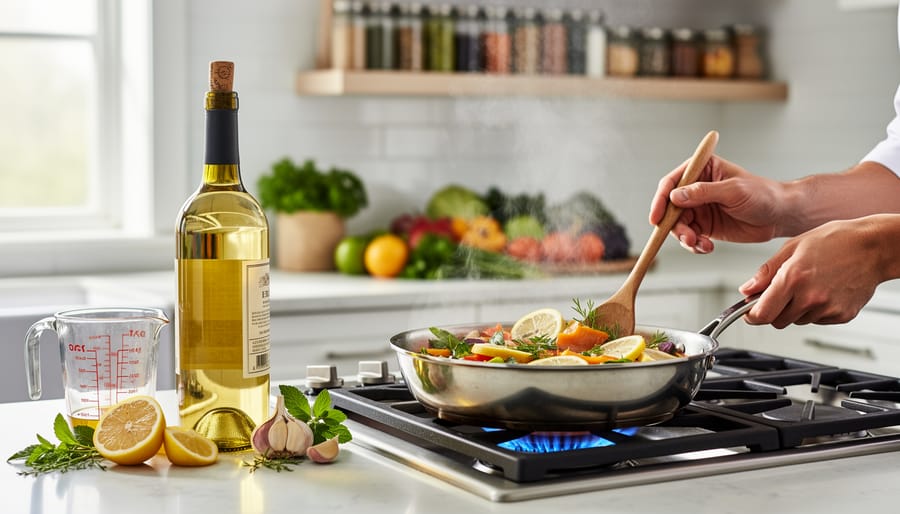
This combination replicates white wine’s acidity and body more faithfully than any single-ingredient swap. The standard formula, one part white wine vinegar to two or three parts chicken, vegetable, or seafood broth, mimics both the sharp brightness wine brings and its liquid contribution to a dish. Start with a 1:3 ratio if you’re new to this approach; you can always adjust toward more vinegar for recipes where tang is crucial.
The method works because vinegar diluted with broth balances acidity against savory depth, just as wine does naturally. In risotto, add this mixture the same way you’d incorporate wine, after toasting the rice, pour in your vinegar-broth blend and let it absorb before adding your first ladle of warm stock. For pan sauces, use it to deglaze immediately after removing seared chicken or fish, scraping up the fond while the liquid reduces to concentrate flavors.
Choose your broth type to match the dish: chicken broth for poultry and cream sauces, vegetable broth for lighter fare, seafood stock when cooking shrimp or scallops. The vinegar’s acidity will mellow as it cooks, leaving behind the complexity you’d expect from wine without the alcohol.
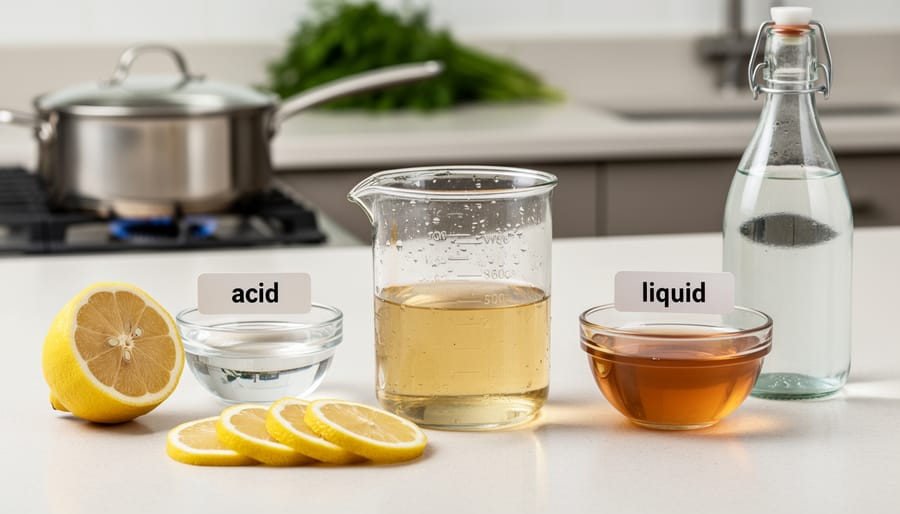
Apple cider vinegar delivers the sharpness white wine provides, but with a subtle fruity undertone that works beautifully with richer proteins. The standard ratio is 1 tablespoon vinegar to 3 tablespoons water or stock, roughly matching the 1:3 ratio from the previous section, but the apple notes make it particularly suited for pork chops, chicken thighs, and dishes with autumn flavors like sage or thyme.
Unlike white wine vinegar’s neutral profile, apple cider vinegar adds a touch of sweetness that can enhance caramelization in pan-roasted meats. It’s especially effective in recipes that include apples, onions, or mustard, where the flavor harmony is natural. Start conservatively with this substitute, add half the ratio first, taste, then adjust. The fruitiness intensifies as it reduces, so what seems subtle raw can become prominent in a finished sauce. For delicate seafood or cream sauces, stick with white wine vinegar instead.
Lemon juice and white grape juice represent opposite ends of the substitute spectrum, one delivers pure acidity, the other pure sweetness, making them useful for recipes where wine plays a singular role rather than a multifaceted one.
Fresh lemon juice works brilliantly when you need brightness and tang, particularly in seafood dishes, light vinaigrettes, or butter sauces where white wine’s primary job is cutting richness. Use it sparingly: start with one tablespoon of lemon juice plus two tablespoons of water or broth for every quarter cup of wine called for, then adjust. The limitation? Lemon announces itself clearly in the finished dish, so it only works where citrus notes make sense.
White grape juice, by contrast, brings sweetness and mild fruitiness without acidity. It’s ideal for recipes like braised chicken or glazed vegetables where you want gentle flavor and don’t need wine’s sharpness. The catch: grape juice can make sauces overly sweet if you’re not careful, and it won’t provide any deglazing power or the complexity that acidity creates. Consider adding a tiny splash of vinegar to balance the sweetness if the recipe originally relied on wine’s tartness alongside its fruit character.
Non-alcoholic white wine offers the simplest substitute for white wine in cooking, use it in equal measure, just as you would the alcoholic version. Quality has improved dramatically in recent years, with producers applying dealcoholization techniques that preserve the acid structure and varietal character you’d expect from traditional wine. Brands now offer convincing Chardonnay and Sauvignon Blanc styles that bring authentic wine flavor without the alcohol.
This option makes most sense when you’re cooking for someone avoiding alcohol entirely, or when you want wine’s exact flavor profile in a dish where you won’t be cooking long enough to evaporate much alcohol anyway. The downside? Cost. Non-alcoholic wine typically runs $12-18 per bottle in 2026, making it pricier than vinegar-and-broth combinations for everyday cooking. Stock a bottle if you frequently need wine substitutes, but for one-off recipe needs, the pantry options we’ve covered often deliver better value.
Dry vermouth makes an excellent substitute for white wine in cooking, and in some recipes, it’s actually superior. This fortified wine contains herbs and botanicals that add complexity beyond what standard white wine offers. Use it in a 1:1 ratio, though you might reduce the amount by 25% if the herbal notes seem too pronounced for your dish.
Vermouth shines in seafood preparations. Its subtle botanical character complements shellfish beautifully, particularly in dishes like moules marinières or scallop pan sauces where those herbal undertones enhance rather than compete with the brine and sweetness of the seafood. The wine’s already-concentrated flavor means it stands up well to high heat without losing character.
Keep in mind that vermouth does contain alcohol, so it’s not suitable if you’re specifically avoiding alcohol. It also has a longer shelf life than regular wine once opened, about three months refrigerated, making it a practical kitchen staple.
Sometimes the best white wine substitute is another type of wine from your rack. While this might seem obvious, many home cooks hesitate to cross wine color lines, fearing they’ll ruin a dish. The reality is more flexible than you’d think, but success depends on matching wine characteristics to the recipe’s needs rather than simply swapping based on what’s open.
**Red wine can replace white wine in heartier preparations** where the deeper color won’t be a visual issue. Think meat-based pasta sauces, braised dishes with dark ingredients like mushrooms or caramelized onions, and rich stews. The key is choosing a lighter-bodied red with good acidity, like Pinot Noir or Gamay, rather than a tannic Cabernet that will add bitterness. A chicken cacciatore or coq au vin blanc becomes coq au vin rouge with this swap. Avoid red wine in cream sauces, seafood dishes, or anything where you want to maintain a light color and delicate flavor.
**Rosé splits the difference beautifully** and works in nearly any recipe calling for white wine. It brings similar acidity and lighter fruit flavors without the heaviness of red wine. Use it confidently in risottos, seafood preparations, and even cream-based sauces where a slight pink tint won’t matter.
**Sparkling wine makes an excellent substitute** when you need acidity and effervescence doesn’t concern you since it cooks off quickly. The bubbles actually help tenderize proteins and create lighter sauces. Dry sparkling wines work particularly well in shellfish dishes and vinaigrettes, though they’re pricier than still wine alternatives.
The golden rule: match the wine’s body and acidity to your dish’s weight and flavor intensity, and consider the final color of your finished plate.
When you deglaze a pan after searing chicken, steak, or pork chops, you need two things: acidity to lift the browned bits stuck to the pan, and enough liquid to create a sauce base. White wine vinegar mixed with chicken or vegetable broth works beautifully here, use one tablespoon of vinegar to three tablespoons of broth for roughly a quarter cup of substitute. Pour it into the hot pan, scrape with a wooden spoon, and let it reduce by half just as you would with wine. The vinegar provides the sharp edge to cut through richness while the broth adds body. Apple cider vinegar works too, though it brings a subtle fruitiness that pairs better with pork than beef. For seafood pan sauces, swap in dry vermouth or combine lemon juice with fish stock for a brighter finish. Whatever you choose, add it while the pan is still hot to maximize the deglazing effect.
Risotto demands gradual liquid addition, which makes substitution trickier than a quick pan sauce. White wine vinegar mixed with vegetable or chicken stock works brilliantly here, use a 1:3 ratio, adding the vinegar-spiked broth in stages just as you would wine. The acidity cuts through the starch while the stock provides body. For mushroom or butternut squash risottos, add a splash of dry vermouth in the first addition for depth, then follow with plain stock. White grape juice diluted with water (1:1) suits sweeter preparations like spring pea risotto, though you’ll want to reduce the final butter slightly to avoid cloying richness. The key is maintaining that slow flavor build, don’t dump all your substitute in at once, or you’ll lose the layered complexity that makes risotto special.
Seafood dishes demand substitutes that bring acidity and brightness without overwhelming the delicate flavors of fish and shellfish. Dry vermouth stands out here, its herbal complexity complements seafood beautifully, and you can use it in a 1:1 swap for white wine in recipes like shrimp scampi or steamed mussels. For a non-alcoholic option, combine fresh lemon juice with low-sodium seafood stock (1 tablespoon lemon to 1/4 cup stock per 1/4 cup wine). This works exceptionally well in poached halibut or clam pasta dishes.
White wine vinegar diluted with vegetable broth (1 part vinegar to 3 parts broth) also succeeds with firmer fish like salmon or swordfish, where you need acidity to cut through richer textures. Avoid apple cider vinegar here, its fruity notes clash with seafood’s mineral quality. Whatever substitute you choose, add it early enough to let the acidity mellow during cooking, ensuring the substitute enhances rather than dominates the ocean-fresh taste you’re after.
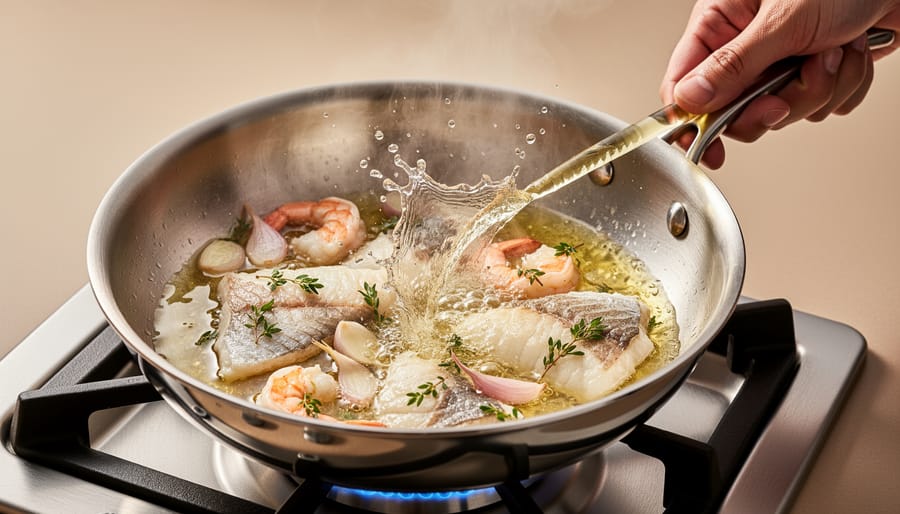
Cream-based sauces present unique challenges when substituting for white wine because acidity can cause dairy to separate or curdle. The key is choosing gentler acids and adding them at the right stage of cooking.
For classic alfredo or carbonara-style sauces where wine typically deglazes the pan before cream is added, use a 50/50 mix of low-sodium chicken broth and very small amounts of white wine vinegar, start with one teaspoon of vinegar per quarter cup of liquid. Add this mixture to your hot pan, let it reduce by half, then remove from high heat before introducing cream. This prevents the acid from shocking cold dairy.
White grape juice mixed with a squeeze of lemon works surprisingly well in lighter cream sauces with seafood or chicken. The mild sweetness complements cream without adding harsh acidity. Use three tablespoons of juice plus half a teaspoon of lemon juice to replace a quarter cup of wine.
Dry vermouth is your safest bet if you’re comfortable with alcohol content. Its lower acidity than wine means less curdling risk, and the herbal notes enhance rather than compete with butter and parmesan. Use it in equal measure to the wine called for, adding it before the cream.
Whatever substitute you choose, always temper your cream by warming it slightly before adding to the sauce, and keep your heat moderate once dairy enters the pan.
The fastest way to ruin an otherwise perfect dish is to treat substitutes as exact 1:1 replacements without adjusting your technique. I’ve watched home cooks pour a full cup of white wine vinegar into a risotto the same way they’d add wine, then wonder why their dinner tastes like a salad dressing. The acidity concentration matters, vinegar packs about three times the acidic punch of wine, so you need far less and should balance it with broth or water.
Here are the most common errors I see when people substitute for white wine:
Another misstep happens with cream-based sauces. Lemon juice can curdle dairy if added too quickly or at too high a temperature, while wine’s lower acidity and alcohol content prevent this splitting. When substituting citrus juice, pull the pan off direct heat first, add the juice gradually while stirring, then return to low heat. It’s a small adjustment that prevents a broken, grainy sauce.
The bigger lesson here is that substituting isn’t just about finding the right ingredient, it’s understanding how that ingredient behaves differently than wine during cooking. Taste as you go, adjust your ratios, and trust your palate over rigid measurements.
The next time a recipe calls for white wine and you realize your bottle is empty, or you’d simply prefer not to use alcohol, you’ll know exactly what to reach for instead. Understanding why wine works in cooking transforms how you choose substitutes. It’s not about finding a magic ingredient that tastes exactly like Pinot Grigio; it’s about replicating acidity, building flavor complexity, and providing the right liquid base for your dish.
Your pantry likely already contains several excellent options. The white wine vinegar and broth combination works beautifully for most applications. Apple cider vinegar suits heartier dishes. Lemon juice brightens seafood. Each substitute serves the same fundamental purpose wine does, just through different ingredients.
Think of these substitutions as an extension of wine appreciation itself. When you understand what wine contributes to a dish, the bright acid that balances richness, the aromatic complexity that develops during cooking, you’re applying wine knowledge in a practical, delicious way. You’re not compromising; you’re adapting technique to circumstance.
So experiment with confidence. Taste as you cook. Adjust ratios to suit your preference. The best cooks understand ingredients deeply enough to know when rules can bend. That’s the real lesson here, and it applies whether you’re cooking with wine or without it.