


Preparing asparagus for cooking takes just a few minutes and involves three essential steps: trimming the woody ends, optionally peeling thick stalks, and blanching briefly in salted boiling water. The reward is asparagus that’s crisp-tender and vibrant, ready to complement everything from a light Sauvignon Blanc to a rich Chardonnay at your table. Most home cooks skip peeling entirely if their asparagus is fresh, focusing instead on a clean trim and a quick blanch that preserves the spear’s natural snap.
The key to success lies in timing. Thinner stalks need just 30 seconds to one minute in boiling water, while thicker spears require one to two minutes. Immediately after blanching, shock the asparagus in ice water for the same duration to halt the cooking and lock in that bright green color. This technique, called blanching, gives you perfect control over texture and ensures your asparagus enhances rather than competes with the wine you’ve chosen for the meal.
For wine enthusiasts, properly prepared asparagus opens up pairing possibilities that would otherwise fall flat. Overcooked, mushy spears clash with delicate whites and mask the subtle vegetal notes that harmonize beautifully with crisp, herbaceous wines. Get the prep right, and you’ve set the stage for a memorable dining experience where food and wine truly elevate each other.
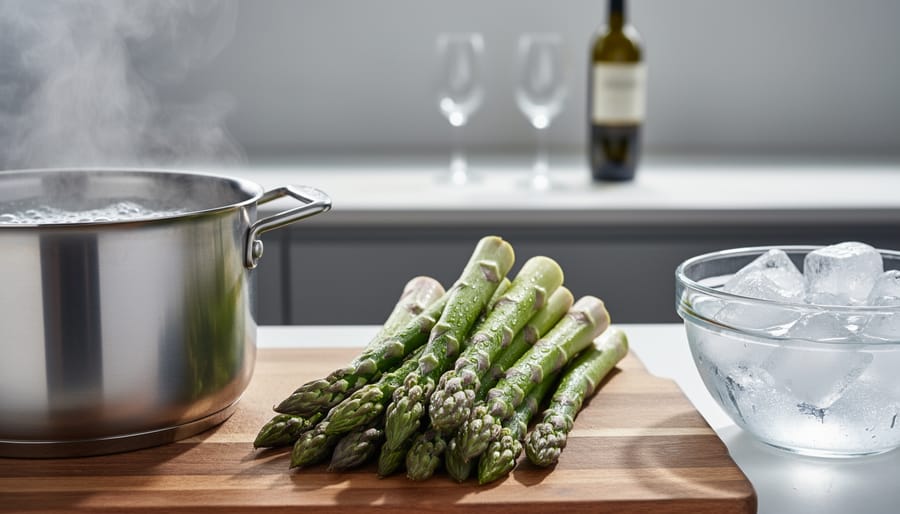
Preparing asparagus properly requires only a handful of basic kitchen tools, but having the right equipment makes all the difference between limp, overcooked spears and crisp-tender stalks that complement your wine beautifully. Each item serves a specific purpose in the blanching process, which transforms raw asparagus into perfectly prepared vegetables ready for your final cooking method.
The ice water bowl deserves special attention. It needs to be large enough to hold all your blanched asparagus at once, with plenty of ice to keep the water genuinely cold throughout the shocking process. This rapid temperature drop is what preserves the asparagus’s delicate, grassy flavor notes, the very characteristics that make it such a natural partner for crisp white wines and certain rosés. If you skip the ice bath or use lukewarm water, you’ll lose both the texture and the clean flavor profile that elevates your wine pairing from ordinary to memorable.
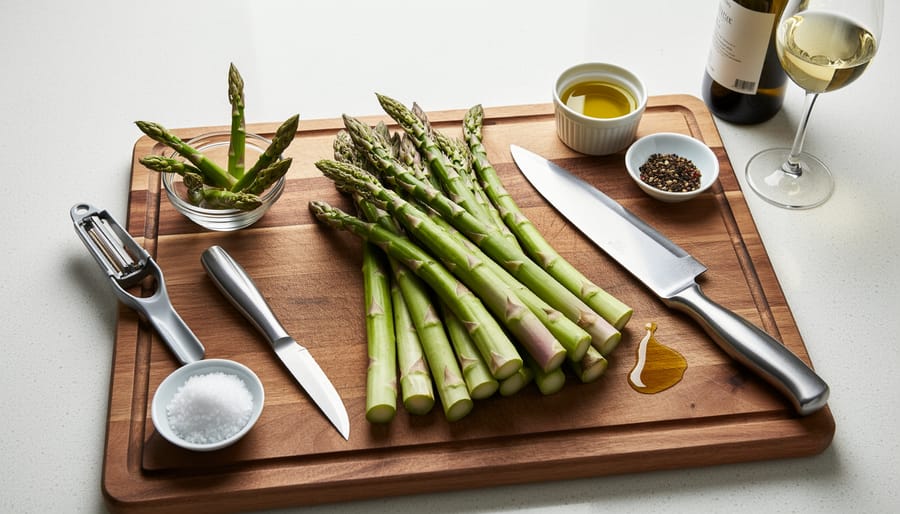
Before you start blanching, take a moment to examine your asparagus. Fresh spears will have tightly closed tips, firm stems, and a vibrant green color with moist, freshly cut ends. If your asparagus passes this test, meaning it’s really fresh and the stalks feel tender rather than woody, it’s peeling not required. You’ll only need to peel if the stalks feel fibrous or you notice the outer skin looks tough, which typically happens with older asparagus or very thick spears.
From a safety standpoint, the blanching process itself is straightforward, but there’s one critical step you cannot skip. After you remove the asparagus from the boiling water, you must immediately plunge it into ice water for the same duration it was blanched. This shock stops the cooking process instantly, preventing the spears from becoming mushy and ensuring they remain food-safe if you’re preparing them ahead.
Beyond that, standard kitchen safety applies: work with clean hands and equipment, keep your boiling water at a safe distance, and use tongs or a slotted spoon to avoid steam burns when transferring the asparagus between pot and ice bath.
Pick up your first asparagus spear and examine it closely. Fresh, high-quality asparagus has tight, compact tips and smooth, unwrinkled skin along the stalk. If the skin looks glossy and feels firm when you run your thumb along it, you’re in luck, it doesn’t need peeling. Really fresh asparagus can skip this step entirely.
However, if you notice loose scales near the tip, wrinkled skin on the lower stalk, or the surface feels rough or fibrous, peeling will make a noticeable difference in tenderness. Older asparagus develops a tougher outer layer that can be unpleasant to eat, particularly on thicker spears.
When peeling is necessary, the technique is straightforward. Lay the spear flat on your cutting board and hold it gently near the tip. Position your vegetable peeler about three-quarters of the way up the stalk, just underneath the tip, and drag it left to right in smooth, even strokes. Rotate the spear slightly after each pass to peel all sides evenly, working down toward the base.
Don’t peel the delicate tip itself, you’ll remove the tender parts you want to preserve. The goal is simply to remove the fibrous outer layer from the lower stalk, creating uniform tenderness from top to bottom that will cook evenly and pair beautifully with wine.
Fill a large pot about three-quarters full with water and place it over high heat. The pot should be big enough to hold all your asparagus spears comfortably, crowding them makes even cooking difficult.
Once the water reaches a rolling boil, add a generous pinch of salt. You’re looking for water that tastes pleasantly seasoned, roughly like the ocean. Salt does more than flavor the asparagus; it helps preserve that vibrant green color and enhances the vegetable’s natural sweetness, which matters when you’re planning to serve it alongside wine.
Blanching, briefly immersing food in boiling water, is the technique we use here because it gently cooks the asparagus while locking in color, texture, and those delicate, grassy flavors that pair so beautifully with crisp whites and certain rosés. Unlike roasting or sautéing from raw, blanching gives you precise control over doneness and creates a clean flavor profile that won’t compete with your wine.
Keep the water at a vigorous boil while you prepare to add the asparagus in the next step.
Timing your blanch correctly is where most people either nail it or end up with mushy spears, so pay attention to thickness. Hold a spear between your fingers: if it’s about as thin as a pencil, you’re looking at 30 seconds to 1 minute in boiling water. Thicker spears, closer to your thumb’s width, need 1 to 2 minutes. These thin vs thick blanching times aren’t arbitrary; they’re calibrated to bring the asparagus to crisp-tender without cooking it through, which matters enormously if you’re finishing the spears later or pairing them with a delicate wine.
Watch for the shift from raw to just-tender. When you pierce a spear with a knife tip, you should feel slight resistance, not snap or total give. The color will brighten to a vibrant green within the first 30 seconds, but that alone doesn’t mean it’s done. You want the texture to soften just enough that the vegetable loses its raw bite but retains a clean, grassy sweetness. Overcook by even a minute and you’ll dull those bright, mineral notes that make asparagus such a natural companion for crisp whites and herbaceous rosés. Pull the spears early if you’re planning to sauté or grill afterward; they’ll finish cooking then.
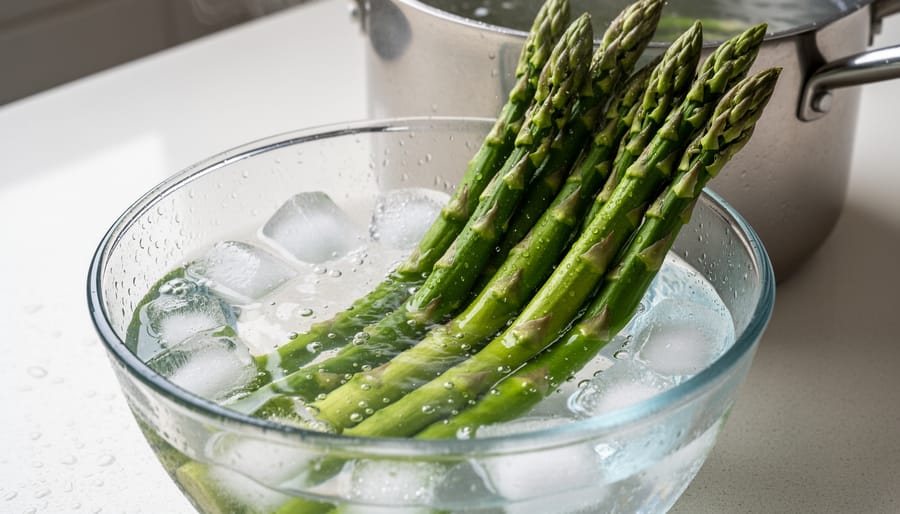
The moment your asparagus comes out of the boiling water, you need to act fast. Use your slotted spoon or tongs to transfer the spears immediately into the bowl of ice water you prepared earlier. This sudden temperature drop, called “shocking”, is what locks in that vivid green color and stops the cooking process dead in its tracks.
Leave the asparagus submerged in the ice bath for the same amount of time it spent in the boiling water. If you blanched thinner spears for 30 seconds, give them 30 seconds in the ice. Thicker asparagus that blanched for two minutes gets two minutes in the cold bath. This equal timing ensures the residual heat trapped inside the stalks doesn’t continue cooking the vegetable from the inside out.
What’s happening beneath the surface is simple but crucial. The ice water halts enzyme activity that would otherwise turn those bright spears dull and mushy. It also sets the cell structure at precisely the crisp-tender stage you just achieved, so whether you’re finishing them on the grill in ten minutes or storing them until tomorrow’s dinner party, they’ll maintain that perfect texture. For wine lovers planning an elegant pairing, this step guarantees your asparagus will taste as fresh and vibrant as it looks on the plate.
Once your asparagus emerges from its ice bath, lift it out with a slotted spoon or tongs and transfer to a clean kitchen towel or several layers of paper towels. Pat the spears gently but thoroughly to remove all surface moisture. This step isn’t just about tidiness, excess water will create steam during roasting or grilling, preventing the flavorful browning and caramelization that makes asparagus such a compelling partner for wine. If you’re storing the asparagus for later use, drying ensures it won’t become waterlogged in the refrigerator. Your asparagus is now perfectly prepped and ready for whatever cooking method you choose.
Your asparagus should emerge from its ice bath with a brilliant, vibrant green color, not dull or olive-toned. The texture should be crisp-tender, meaning the spears hold their shape and offer slight resistance when you press them with your finger, but they’re no longer raw and hard. Test by piercing a spear near the thicker end with a fork or knife; it should slide through with minimal pressure, yet the asparagus should still feel firm enough to pick up without flopping.
If you plan to roast, grill, or sauté your asparagus next, it should still be slightly undercooked at this stage. The blanching process has tenderized the spears and set their color, but they’ll finish cooking with your chosen method. When you bend a spear gently, it should flex without snapping, a sign that the fibers have softened just enough. If your asparagus feels mushy, bends limply, or has lost its vibrant hue, you’ve likely blanched too long or skipped the ice-water shock.
For asparagus destined to accompany a crisp Sauvignon Blanc or delicate rosé, this prepared state preserves the vegetable’s clean, grassy character. The spears are ready to absorb seasonings, develop a golden char, or simply be dressed and served, knowing their texture will complement rather than compete with your wine.
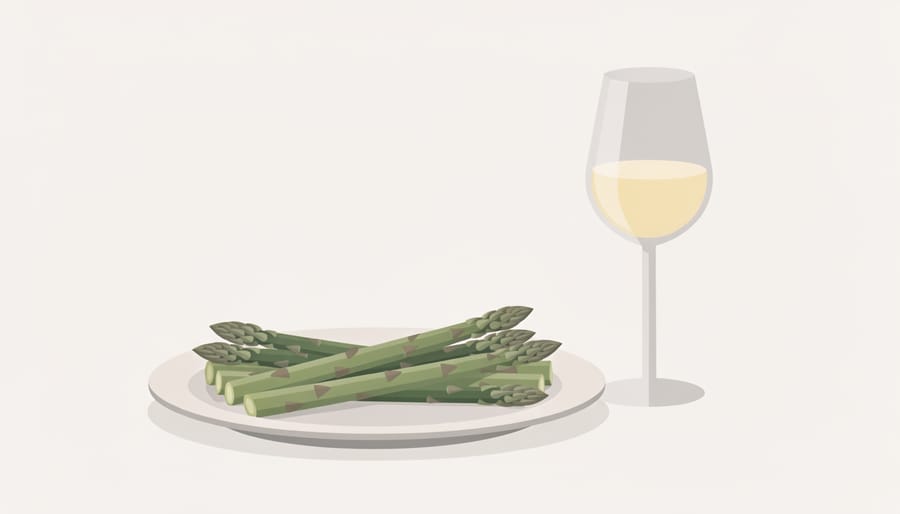
Your beautifully prepared asparagus is now ready for its final transformation. If you’re not cooking immediately, refrigerate the blanched, shocked, and dried spears in an airtight container for up to 24 hours, they’ll hold their vibrant color and crisp-tender texture perfectly. When you’re ready to proceed, you have wonderful options: roast with olive oil and garlic, toss on the grill for smoky char, or sauté quickly in butter and lemon. Each method benefits from the solid foundation you’ve created through proper blanching.
Here’s where wine lovers gain a real advantage. Properly prepared asparagus maintains its clean, grassy character without the sulfurous notes that can clash with wine. This makes pairing significantly easier. Crisp whites like Sauvignon Blanc, Grüner Veltliner, or dry Riesling complement asparagus beautifully, echoing its herbaceous qualities. Certain rosés with good acidity also work wonderfully. Exploring different wine styles alongside asparagus becomes part of the pleasure, especially when you’re planning wine and grill combinations or assembling easy wine dinners for friends. The vegetable’s delicate flavor won’t overwhelm your carefully chosen bottle, and your wine won’t fight against poorly cooked asparagus.
You can, but blanching sets the vibrant green color and creates that perfect crisp-tender texture that makes asparagus shine alongside wine. Skipping it means you’ll go straight to your final cooking method, which may result in uneven cooking or duller color.
After blanching and shocking in ice water, you can store prepared asparagus in an airtight container in the refrigerator for up to 24 hours. Pat the spears completely dry and wrap them in paper towels to absorb excess moisture before storing.
Ice water is crucial for stopping the cooking process immediately after blanching, but in a pinch you can use the coldest tap water available and change it several times. The goal is rapid cooling to preserve that crisp texture and bright color.
Absolutely. Thinner spears need only 30 seconds to 1 minute of blanching, while thicker ones require 1 to 2 minutes. Misjudging thickness leads to either mushy or undercooked asparagus, neither of which pairs well at the table.
Beyond these common concerns, readers occasionally ask whether the blanching water can serve another purpose. While it contains some nutrients and flavor from the asparagus, it’s lightly salted water best discarded. If you’re looking for ways to add depth to other dishes, consider exploring white wine substitutes that bring acidity and complexity to your cooking instead of repurposing vegetable water.
The key takeaway across all these questions is that proper preparation isn’t fussy, it’s foundational. Each step serves a specific purpose in achieving asparagus that looks beautiful, tastes fresh, and complements the wines you’ve chosen to pour.
Preparing asparagus properly isn’t complicated, but it makes all the difference when you’re crafting a meal worthy of your favorite wine. You’ve learned the essential steps, assessing freshness, blanching to crisp-tender perfection in one to two minutes, shocking in ice water, and finishing with a thorough drain. These fundamentals give you asparagus that holds its vibrant color and clean flavor, the kind that elevates a simple dinner into something memorable.
Armed with these techniques, you can cook asparagus confidently, knowing it will complement rather than compete with your wine. Whether you’re hosting friends or simply treating yourself to a thoughtful pairing, mastering these basics transforms your entertaining from effortful to effortless. The next time you’re planning a menu around a beautiful bottle, you’ll know exactly how to prepare asparagus that does it justice.