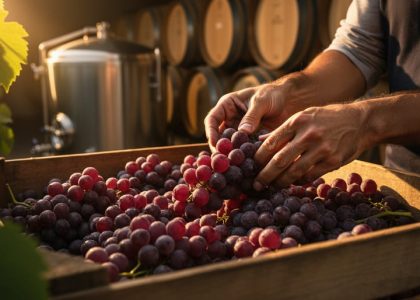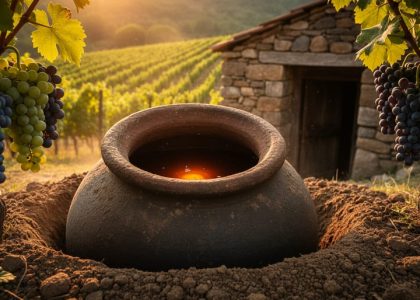

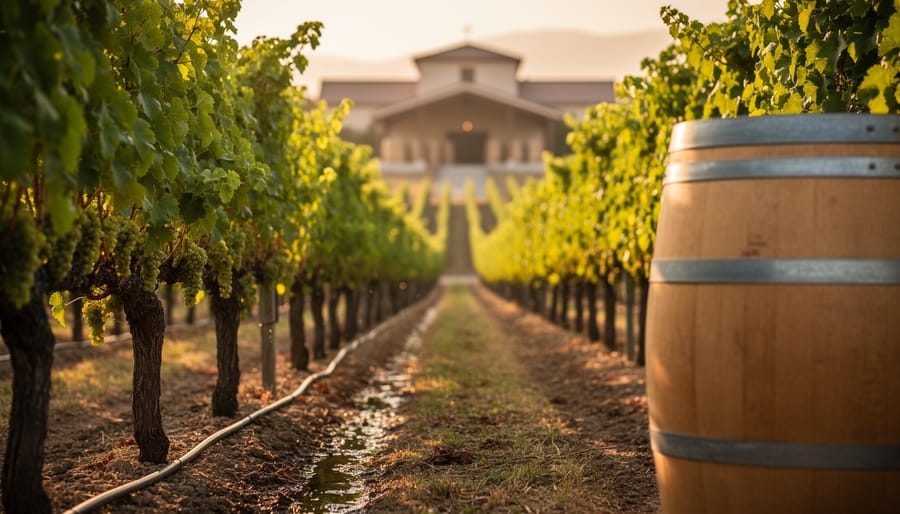
Wine sustainability refers to growing grapes and producing wine in ways that protect the environment, support communities, and remain economically viable for the long term. It encompasses everything from soil health and water conservation in the vineyard to energy use in the cellar, fair labor practices, and packaging choices that minimize carbon footprint.
The stakes couldn’t be higher. Climate change is already reshaping growing seasons across wine regions worldwide, forcing vintners to adapt or risk losing the terroir that makes their wines distinctive. Water scarcity threatens vineyards in regions from California to Australia. Soil degradation from decades of conventional farming has left some historic wine lands depleted of the biodiversity that naturally controls pests and nourishes vines.
But here’s what makes this moment different: sustainability in wine has evolved from a feel-good marketing angle into a practical necessity backed by certifications, measurable standards, and real results. Whether you’re browsing wine shop shelves or planning your next cellar addition, understanding what sustainability actually means helps you make choices aligned with your values without sacrificing the wines you love.
This guide breaks down how sustainable practices work in vineyards and wineries, what the various certifications actually guarantee, and how to identify genuinely sustainable wines when you shop. You’ll discover that supporting sustainable winemaking doesn’t require compromise. Many of today’s most compelling, terroir-expressive wines come from producers who’ve embraced these practices as essential to quality itself.
Wine sustainability refers to practices throughout the winemaking process that balance three interconnected pillars: environmental stewardship, social responsibility, and economic viability. Unlike a simple organic certification or single eco-friendly practice, true wine sustainability considers the entire lifecycle of wine, from how vines are grown and grapes harvested to how bottles are packaged, shipped, and eventually recycled or disposed of.
What sets wine sustainability apart from general agricultural sustainability is the unique nature of viticulture itself. Grapevines are perennial crops that can produce for decades, meaning decisions made today about soil health and water management will affect vineyard productivity for generations. Wine production also involves energy-intensive processes like fermentation temperature control, barrel aging, and bottling, creating environmental considerations that extend well beyond the field.
The environmental dimension addresses how wine production affects ecosystems, climate, and natural resources. The social aspect considers workers’ rights, fair wages, and community relationships. Economic sustainability ensures that wineries remain profitable enough to continue their environmental and social commitments without sacrificing quality or forcing unsustainable shortcuts. When these three pillars work together, they create a wine industry that can thrive indefinitely without depleting the resources or communities it depends on.
Sustainable viticulture begins with how grapes are grown, and the most impactful practices happen right in the vineyard soil.
Water conservation stands at the forefront. Drip irrigation systems deliver water directly to vine roots, reducing waste by up to 50% compared to traditional sprinklers. Many growers monitor soil moisture with sensors, irrigating only when vines actually need it. Some estates capture rainwater in reservoirs, using it during dry months instead of draining aquifers.
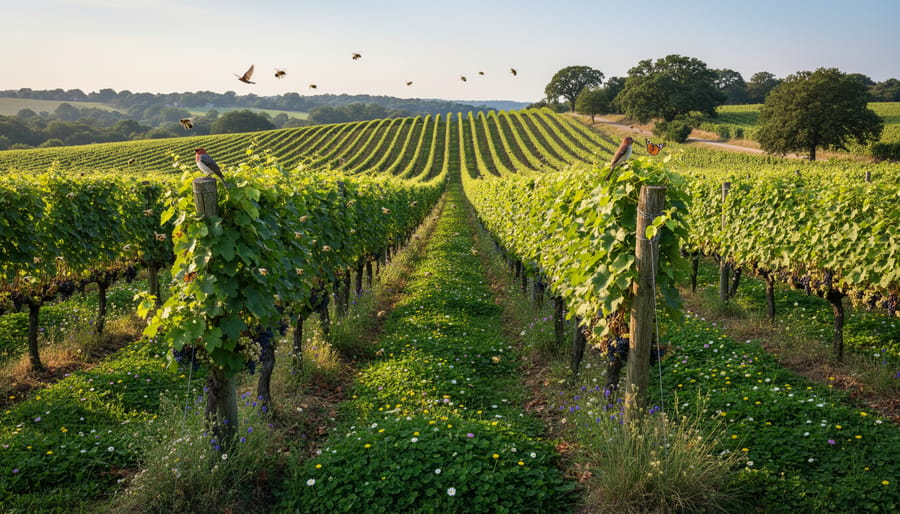
Soil health drives vine vitality without synthetic fertilizers. Cover crops like clover and vetch fix nitrogen naturally while preventing erosion. Composting grape pomace and stems returns nutrients to the soil, creating a closed loop. Reduced tillage preserves soil structure and the microorganisms that keep vines healthy, building resilience against drought and disease.
Biodiversity protection transforms monoculture vineyards into functioning ecosystems. Hedgerows and native plantings provide habitat for beneficial insects that prey on pests. Owl boxes and bat houses encourage natural predators of rodents and moths. This living network reduces the need for intervention while strengthening the vineyard against imbalances.
Pest management shifts from chemical dependency to integrated approaches. Pheromone traps disrupt mating cycles of harmful insects. Sulfur and copper, used sparingly, control fungal diseases without synthetic fungicides. When problems arise, growers respond with targeted solutions rather than calendar-based spraying, protecting both vineyard workers and the surrounding environment.
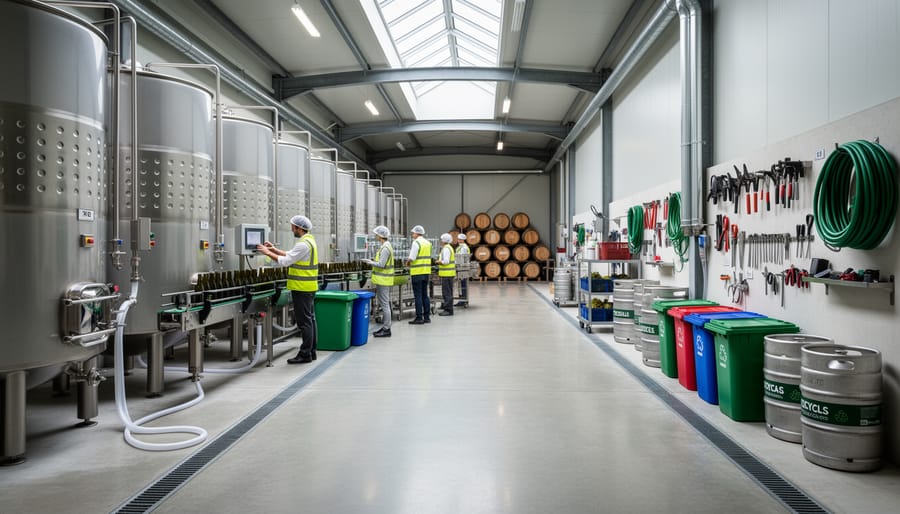
Once grapes arrive at the winery, sustainability continues through smart production choices that minimize environmental impact without compromising quality.
Energy efficiency starts with facility design. Many sustainable wineries use gravity-flow systems that move wine between tanks and barrels without pumps, cutting electricity use substantially. Solar panels on winery roofs generate clean power for refrigeration and lighting, while natural ventilation and earth-bermed buildings reduce heating and cooling needs. Some producers schedule energy-intensive operations like bottling during off-peak hours when renewable energy is more available.
Water recycling systems capture and treat wastewater from barrel washing and equipment cleaning, recirculating it for irrigation or non-production uses. This can reduce fresh water consumption by 50% or more in facilities that once flushed thousands of gallons down the drain daily.
Waste reduction means composting grape pomace (the leftover skins and seeds after pressing) rather than landfilling it, and returning it to vineyards as soil amendment. Sustainable wineries also reuse oak barrels multiple times and donate spent barrels to community gardens or craftspeople.
Packaging decisions matter enormously. Lighter glass bottles require less energy to produce and transport, while alternative formats like bag-in-box or aluminum cans further reduce carbon footprint. Even cork versus screw cap choices carry sustainability implications based on renewable materials and recyclability.
Once wine leaves the winery, sustainability depends on distance and decisions. Transportation accounts for a significant portion of wine’s carbon footprint, shipping a case from Europe to North America generates substantially more emissions than buying from a regional producer. Container ships are relatively efficient per bottle, but air freight (used for time-sensitive releases) multiplies the environmental cost dramatically.
Bottle weight matters more than most consumers realize. A standard wine bottle weighs about 500 grams, but premium bottles often reach 800 grams or more. That extra glass requires additional energy to produce and transport. Some forward-thinking producers have shifted to lighter bottles without sacrificing quality, reducing their carbon footprint by 20-30% per shipment.
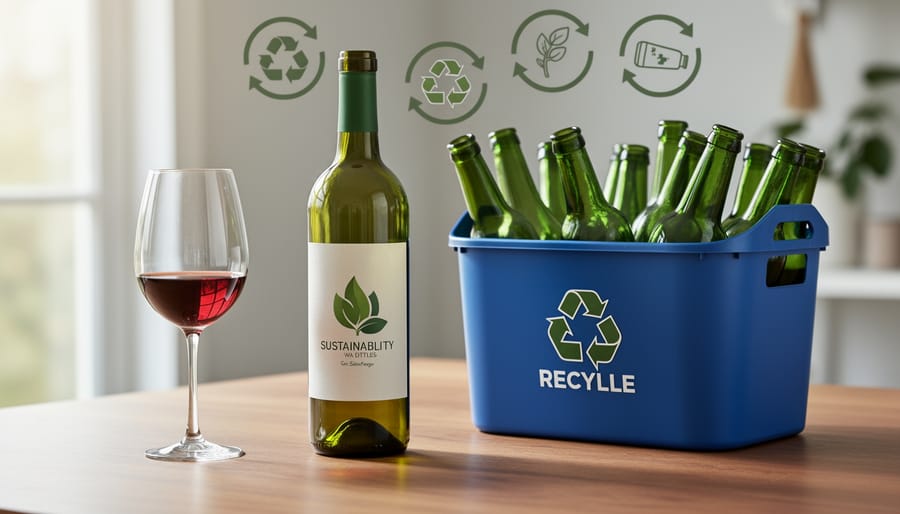
Your choices close the sustainability loop. Opting for wines from closer regions cuts transportation emissions. Recycling bottles ensures the glass gets reused, wine bottles are infinitely recyclable without quality loss. Supporting wineries that use lighter bottles or alternative packaging like bag-in-box signals market demand for sustainable practices.
Even small shifts add up. If you drink a bottle weekly, choosing regional wines over long-haul imports prevents roughly 50 pounds of CO2 annually. Sustainability isn’t just what happens in the vineyard, it’s completed when you make conscious choices at the register and the recycling bin.
Environmental sustainability in wine centers on minimizing ecological harm while nurturing the natural systems that make viticulture possible. It’s the dimension most consumers picture when they think about sustainable wine, focusing on how vineyards and wineries interact with the earth, air, and water around them.
Organic and biodynamic farming form the foundation. These approaches reject synthetic pesticides and herbicides, relying instead on composting, cover crops, and natural pest management. Organic certification requires strict adherence to chemical-free practices, while biodynamic methods go further, treating the vineyard as a holistic ecosystem with planting schedules tied to lunar cycles and biodiversity integration.
Carbon neutrality has emerged as a critical goal. Forward-thinking wineries measure their entire carbon footprint, from tractor fuel to glass production, then reduce emissions through renewable energy, lighter bottles, and efficient logistics. Some offset remaining emissions through reforestation or renewable energy credits, though reduction always trumps offsetting.
Ecosystem preservation connects individual vineyards to the broader landscape. This means protecting adjacent wetlands and forests, creating wildlife corridors, maintaining soil health through minimal tillage, and preserving native plant species. Water conservation through drip irrigation and rainwater harvesting addresses scarcity in drought-prone regions. These practices recognize that healthy vineyards depend on healthy surrounding ecosystems, not isolation from nature.
Social sustainability in wine production centers on the people behind the bottle, from vineyard workers to winery staff to the communities surrounding wine regions. Fair labor practices form the foundation, ensuring workers receive living wages, safe working conditions, and reasonable hours during both harvest and off-season periods. This includes access to healthcare, protection from pesticide exposure, and opportunities for skill development and advancement.
Community engagement extends this commitment beyond the winery gates. Sustainable producers invest in local infrastructure, support regional education programs, and preserve cultural traditions tied to winemaking heritage. They source materials locally when possible, creating economic ripple effects throughout wine-producing areas.
Worker welfare considerations address housing quality for seasonal laborers, language accessibility for training materials, and family support systems. Some wineries provide childcare, transportation assistance, or scholarship programs for workers’ children. These practices recognize that sustainable wine production depends on stable, healthy communities, not just environmental stewardship. When you choose wines from socially responsible producers, you’re supporting dignified employment and thriving wine regions.
Economic sustainability ensures that winemakers can maintain their livelihoods while producing quality wine responsibly. Unlike purely profit-driven models, this approach balances financial viability with long-term stability, recognizing that vineyard land degraded by cost-cutting measures or communities depleted by unfair wages ultimately undermine the industry itself.
Fair pricing structures play a central role. When retailers and importers compress margins too severely, producers face impossible choices between quality, worker welfare, and environmental investments. Sustainable economics means pricing that reflects true costs: the labor behind hand-harvesting, the years required to transition vineyards to organic practices, and the expertise demanded by minimal-intervention winemaking.
Small-scale winemakers often exemplify this balance best. Without shareholders demanding quarterly growth, family estates and boutique producers can prioritize generational thinking, investing in soil health that pays dividends decades later, maintaining traditional techniques that preserve regional character, and fostering apprenticeships that sustain craft knowledge.
Supporting these producers matters. Your purchase directly funds practices that industrial operations struggle to justify financially: preserving old vines, maintaining steep hillside vineyards accessible only by foot, or fermenting with native yeasts that require careful monitoring.
Navigating sustainability claims can feel overwhelming, but third-party certifications offer reliable guideposts. Look for labels like USDA Organic, which prohibits synthetic pesticides and fertilizers, or Demeter Biodynamic, representing a holistic farming philosophy. California’s Certified Sustainable Wine program verifies sustainable practices across vineyards and wineries, while B Corp certification evaluates social and environmental performance company-wide.
European labels include Terra Vitis and VinNatura, each with distinct standards. Fair Trade certification focuses on equitable labor practices and community investment. Not all sustainable wineries pursue formal certification due to cost or philosophical reasons, so some excellent producers rely on transparent communication rather than third-party seals. When you spot these certifications, you’re seeing evidence of independently verified commitments, not just marketing claims.
Standing in the wine aisle can feel overwhelming when you want to make sustainable choices. Start by scanning labels for third-party certifications, organic, biodynamic (Demeter), Salmon Safe, or regional programs like California’s Certified Sustainable mark all indicate verified practices. These logos mean independent auditors confirmed the claims, not just marketing spin.
Lighter bottles signal environmental awareness; heavy glass looks premium but requires more energy to produce and ship. Check the back label for information about farming methods, carbon offsets, or water conservation efforts. Wineries proud of their sustainability story typically share it.
Don’t hesitate to ask wine shop staff direct questions: “Do you know how this wine is produced?” or “Does this winery have sustainability certifications?” Knowledgeable retailers appreciate informed customers and can recommend producers doing genuine work. Some sustainable wineries also make excellent cooking wines, when you’re exploring substitutes for white wine consider sustainable options that serve dual purposes.
Local wines reduce transportation emissions significantly compared to imports, though a sustainably-farmed wine shipped efficiently may outperform a conventional local producer. The key is looking beyond green-washed labels to find transparent producers who document their practices.
Your wine purchases do more than fill your cellar, they signal to producers what matters to consumers. When you consistently choose wines from certified sustainable wineries, you’re voting with your wallet. Producers notice these patterns, and increased demand for sustainable options encourages more vineyards to adopt eco-friendly practices. This ripple effect extends beyond individual bottles to influence entire wine regions.
Recycling goes beyond tossing bottles in the blue bin. Rinse bottles before recycling to prevent contamination, and consider returning to wine shops that offer bottle redemption programs. Some wineries accept returned bottles for reuse. If you’re looking to reduce your overall environmental footprint, use less wine by buying smaller format bottles or exploring alternatives for cooking applications where premium wine isn’t essential.
Spread awareness through conversations with retailers and restaurant sommeliers. Ask about sustainable options, request more eco-friendly wines, and share your knowledge with fellow wine lovers. Social media reviews highlighting a winery’s sustainability efforts amplify their message and inspire others to follow suit. Your informed choices create accountability throughout the supply chain.
Experiencing sustainable wine firsthand transforms abstract concepts into tangible appreciation. Visiting wineries like Tablas Creek Vineyard in Paso Robles, California, where sheep graze between vines to manage vegetation naturally, reveals how sustainability enhances wine character rather than compromising it. Their estate-grown, biodynamically farmed wines demonstrate that environmental stewardship produces exceptional quality. In Oregon’s Willamette Valley, King Estate Winery operates entirely on renewable energy and achieved B Corporation certification, offering tours that showcase solar arrays alongside tasting flights of their organic Pinot Noir. For European exploration, consider Emiliana Organic Vineyards in Chile’s Colchagua Valley, where alpacas and horses replace tractors in certain vineyard blocks. Even if you cannot visit these properties, seeking out their wines supports verifiable sustainability programs. Look for bottles from Frey Vineyards (America’s first organic winery) or Bonterra Organic Estates at your local shop. These purchases extend beyond better cooking choices into conscious consumption that rewards producers investing in long-term environmental health while delivering wines worth savoring.
Not always. While some certified sustainable wines carry premium prices, many cost the same as conventional options because sustainable practices often reduce long-term production costs. You’ll find sustainable wines at every price point, from everyday bottles to special occasion selections.
Sustainable wine tastes like wine, quality depends on the winemaker’s skill, not the certification. Many winemakers argue that healthy, sustainably managed vineyards actually produce better grapes with more pronounced terroir characteristics.
Look for third-party certifications from recognized programs rather than vague marketing language. Wineries serious about sustainability provide specific details about their practices on their websites and are transparent about their environmental data.
Yes, glass wine bottles are infinitely recyclable, and recycling them significantly reduces the environmental impact of your wine consumption. Check your local recycling guidelines, as some areas have specific requirements for glass.
Another common question involves leftover wine. If you’re concerned about waste from bottles you can’t finish, remember that wine has uses beyond drinking, from cooking without wine where leftover wine becomes an ingredient, to making vinegar or even watering acid-loving plants in small amounts. These practical applications mean less wine goes down the drain, though the sustainability value pales compared to choosing responsibly produced bottles in the first place.
Some consumers also wonder whether sustainable wines age well. The answer is yes. Sustainability affects how grapes are grown and wine is made, not the fundamental chemistry of aging. A well-made sustainable wine follows the same aging principles as any other quality wine, with proper storage being far more important than certification status.
Wine sustainability isn’t about sacrifice or settling for less. It’s about recognizing that the choices we make with each bottle connect us to a broader story of environmental stewardship, social responsibility, and economic fairness. When you choose sustainable wine, you’re supporting practices that protect the land, ensure fair treatment of workers, and help small producers thrive for generations to come.
The beauty of sustainable wine lies in this reality: wines produced with care for the environment often taste better. Healthy soils produce more expressive grapes. Thoughtful farming preserves the unique character of place. Wineries committed to sustainability tend to be equally committed to quality because they understand that both come from respecting the vineyard ecosystem.
Your wine consumption matters more than you might think. Every sustainable bottle you purchase sends a signal to the industry that these practices deserve support. You’re not just drinking wine, you’re participating in a movement that values the planet’s health alongside the pleasure in your glass.
Start where you are. Ask questions, look for certifications, explore sustainable producers. The journey toward more conscious wine consumption enhances your appreciation while contributing to a healthier wine world for everyone.