
Wine history stretches back over 8,000 years, beginning in the Caucasus region of modern-day Georgia and Armenia before spreading through ancient Mesopotamia, Egypt, Greece, and Rome to become one of humanity’s most enduring cultural touchstones. Understanding this remarkable journey reveals not just how wine evolved from a simple fermented grape beverage into the complex drink we know today, but why certain regions became legendary, how winemaking techniques were refined across millennia, and what historical forces shaped the bottles you enjoy in 2026.
The story of wine is really the story of civilization itself. Ancient Sumerians documented winemaking in cuneiform tablets. Egyptian pharaohs were buried with amphorae for the afterlife. Greek symposia centered around wine-fueled philosophical debate. Roman legions planted vineyards across Europe that still produce exceptional wines today. Medieval monks perfected vineyard classification in Burgundy. Spanish conquistadors brought vines to the Americas. Each era added layers of knowledge, tradition, and innovation that modern winemakers still draw upon.
What makes wine history particularly fascinating for today’s wine lover is how directly it connects to your glass. The reason Champagne sparkles, why Bordeaux blends specific grapes, or what makes Georgian qvevri wines suddenly trendy again all trace back to specific historical moments and decisions. Those ancient techniques weren’t just preserved as museum pieces. They inform current winemaking philosophy, from the resurgence of amphora aging to biodynamic practices that echo pre-industrial methods. Grasping this context transforms wine from a simple beverage into a living link to human ingenuity across the ages.
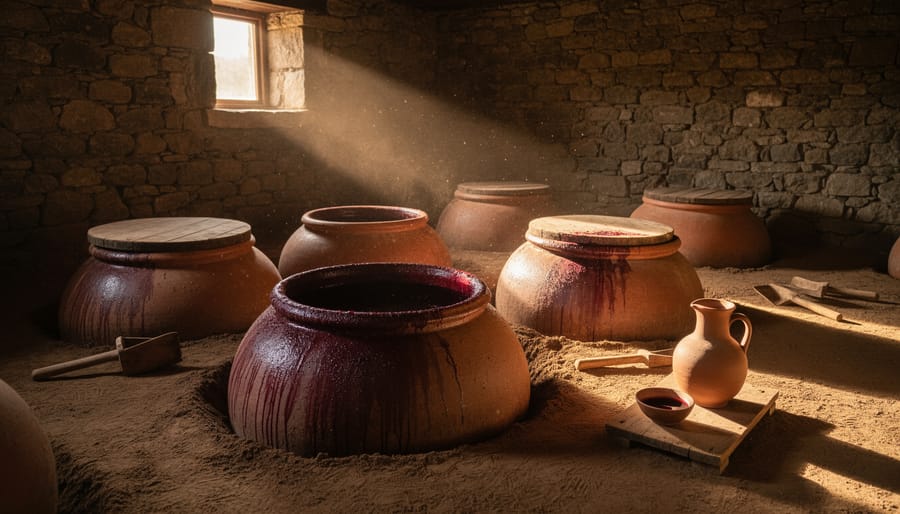
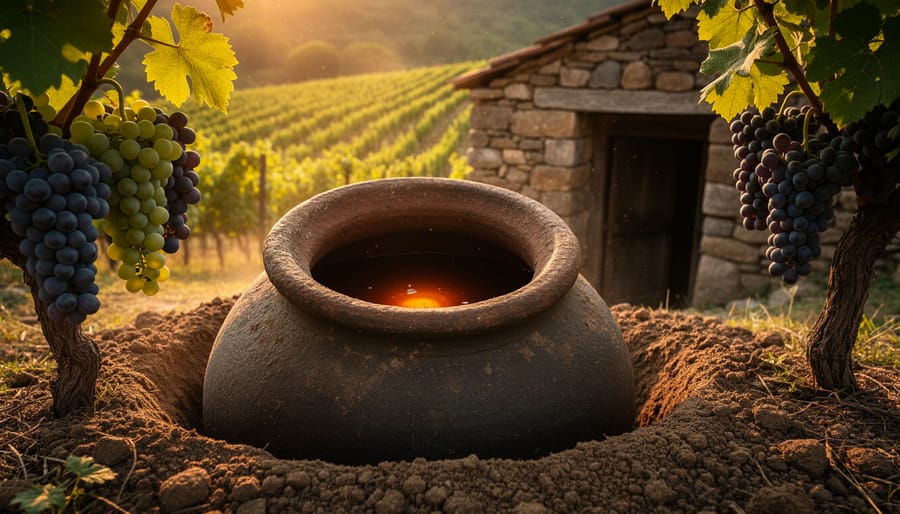
Archaeological discoveries in Georgia’s Caucasus region have pushed the wine history of humanity back to roughly 6000 BCE. Excavations at Neolithic sites near Tbilisi unearthed grape residue in pottery shards dating back 8,000 years, establishing Georgia as the world’s oldest confirmed winemaking region. What makes this discovery remarkable isn’t just its age, but that the winemaking method identified, fermentation in large clay vessels buried underground, remains alive and practiced today.
These vessels, called qvevri, are egg-shaped clay jars sealed with beeswax and buried up to their necks in the earth. Grapes, skins, stems, and all go into the qvevri, where wild yeasts trigger fermentation and the constant underground temperature provides natural climate control. After months of skin contact, the wine develops amber hues, tannic structure, and complex flavors that taste utterly unlike modern filtered wines. Georgian families have passed down this technique for millennia, each generation digging fresh qvevri into their cellars.
The 8,000-year qvevri winemaking tradition now shapes the natural wine movement worldwide. Winemakers from California to Slovenia have adopted qvevri or similar clay vessels, seeking the minimal-intervention approach that defined wine before stainless steel and commercial yeasts existed. When you taste an orange wine fermented on skins in clay, you’re experiencing winemaking closer to its original form, a direct link to the wine history of our earliest ancestors in the Georgian highlands.
Wine flowed through the veins of ancient Egyptian and Mesopotamian civilizations, serving purposes far beyond simple refreshment. In Egypt, wine held sacred status, painted tomb walls from 3000 BCE depict vineyard workers treading grapes, and sealed wine jars accompanied pharaohs into the afterlife. The wealthy elite reserved wine for banquets and offerings to gods like Osiris, while beer remained the common drink. Egyptian vintners marked their amphorae with remarkable specificity: the vineyard name, harvest year, and winemaker’s identity, creating history’s first wine labels that recognized what we now call terroir.
Mesopotamian clay tablets reveal similarly sophisticated wine culture. Kings maintained royal vineyards in regions like the Zagros Mountains, and wine lubricated diplomatic exchanges between city-states. Temple inventories from 2500 BCE catalogued different wine types by origin and quality, white wines from hillside vineyards commanded higher value than lowland reds. Hammurabi’s legal code even regulated wine shops, proving wine’s economic importance.
These labeling practices weren’t primitive marketing; they reflected genuine understanding that location influenced flavor. When an Egyptian jar read “Year 5, Western River, Vintner Khay,” consumers knew what to expect, the earliest expression of vineyard reputation. This ancient recognition that where grapes grow matters laid conceptual groundwork for every modern appellation system, from Burgundy’s climats to Napa’s AVAs. Today’s wine labels descend directly from these 5,000-year-old clay inscriptions.
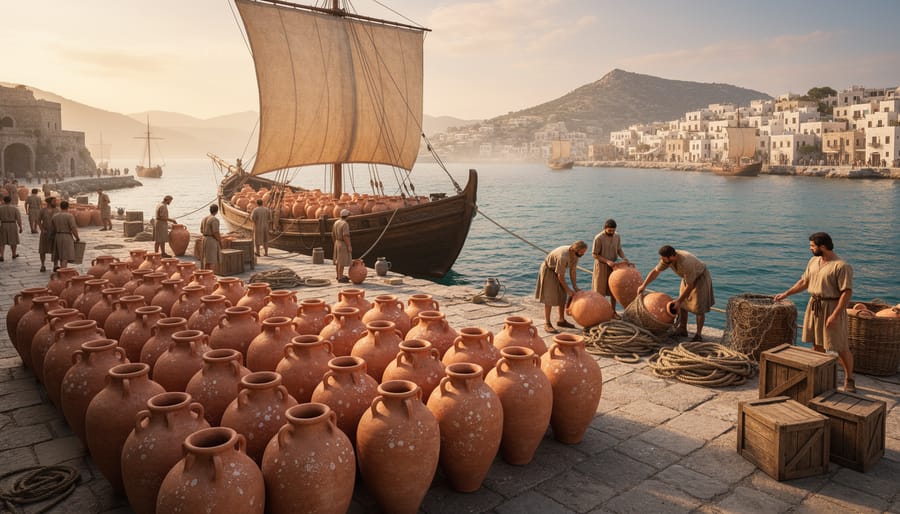
The Greeks planted wine’s roots across the Mediterranean, but the Romans engineered an empire on its vines. When Greek colonists introduced viticulture to Sicily, southern Italy, and coastal France around 600 BCE, they brought more than grapevines, they brought systematic cultivation techniques that would define European winemaking. The Greeks understood pruning, trained vines low to the ground for easier harvesting, and developed early pressing methods. They transported wine in distinctive clay amphorae, sealed with pine resin that gave their wine a distinctive flavor still echoed in modern Greek retsina.
Rome, however, transformed wine from artisan craft into industrial-scale operation. Roman agronomists like Columella and Pliny the Elder wrote detailed treatises on vineyard management that read remarkably modern: they understood soil drainage, vine spacing, canopy management, and even recognized that certain grape varieties performed better in specific locations. This proto-terroir thinking led Romans to classify wines by origin, with Falernian from Campania commanding premium prices much like Château Lafite does today.
The Roman innovation that truly changed wine history was their amphorae trade network. These standardized vessels, stamped with origin marks and vintage dates, created the Mediterranean’s first international wine market. Archaeological digs from Britain to Egypt reveal Roman amphorae, proving wine flowed through the empire like currency. Roman merchants developed the resinous pitch lining that prevented oxidation during long sea voyages, effectively inventing wine preservation technology.
Roman expansion literally planted Europe’s wine future. Legionnaires received land grants in conquered territories and, being Mediterranean men, immediately planted vines. Julius Caesar’s Gallic campaigns brought viticulture to France’s future great regions. By the empire’s peak, Romans had mapped which Gallic hillsides grew the best grapes, knowledge that medieval monks would later refine into Burgundy’s climat system.
When Rome fell, its viticultural legacy endured. The empire left behind not just vines but the fundamental understanding that certain places produce exceptional wine, a concept that drives every serious wine drinker’s curiosity today.
When the Roman Empire crumbled and Europe descended into political chaos, wine’s future seemed uncertain. Yet monasteries became unlikely guardians of viticulture, preserving and refining winemaking knowledge through centuries of upheaval. For medieval monks, wine wasn’t merely agricultural output; it was the literal blood of Christ, essential to the Eucharist. This sacred status meant vineyards received meticulous care even as other knowledge faded.
Benedictine monks, following their founder’s 6th-century rule emphasizing self-sufficiency, planted vineyards across Europe. They kept detailed records of harvests, weather patterns, and fermentation results, creating an invaluable historical archive. But it was the Cistercians, breaking from the Benedictines in 1098, who revolutionized wine history through their systematic approach to terroir.
The Cistercian brothers in Burgundy spent generations observing how wines from neighboring plots tasted distinctly different. They meticulously documented these variations, eventually mapping Burgundy into climats, specific vineyard parcels with unique characteristics. The Clos de Vougeot, established in 1110, became their viticultural laboratory where monks tested vine training, pruning techniques, and harvest timing. Their stone wall still surrounds 125 acres of meticulously studied terroir.
These monks discovered that Pinot Noir thrived on Burgundy’s limestone slopes, developing flavor profiles that shifted from one hillside to the next. They identified ideal sun exposure, drainage patterns, and soil compositions, creating classification systems that endure today. The Cistercians built the foundation for understanding how place shapes wine, a concept that now drives wine appreciation worldwide.
Meanwhile, Benedictines developed Champagne’s vineyards and German Riesling sites along the Rhine. Their slow, patient observation across generations allowed discoveries impossible through individual lifetimes. The wine history of medieval monasteries wasn’t accidental preservation; it was deliberate refinement that transformed winemaking from craft into science, giving us the terroir-focused approach that defines quality wine today.
Spanish conquistadors and Portuguese explorers carried more than swords and crosses to the New World, they brought grapevines, understanding that Catholic Mass required wine for the Eucharist. Where missions took root, so did vineyards.
In Mexico, Hernán Cortés mandated vineyard planting as early as 1524, making it the Americas’ first wine-producing region. Spanish missionaries moved northward into California during the 1700s, establishing the Mission grape variety at each outpost along El Camino Real. Franciscan padres planted vines from San Diego to Sonoma, creating California’s foundational wine culture centuries before Napa’s fame.
South America saw parallel development. Jesuit and Franciscan missionaries brought European vines to Chile’s Central Valley in the 1540s, finding conditions so ideal that Chilean vineyards would later preserve pre-phylloxera genetics lost in Europe. In Argentina, missionaries planted Mendoza’s first vines in 1556, introducing what would become the nation’s signature Malbec heartland.
These weren’t commercial ventures initially, sacramental wine production drove early viticulture. Yet the missionaries’ practical need created lasting wine regions. They selected sites with intuitive terroir understanding, planted cuttings that adapted to New World soils, and trained locals in cultivation techniques that survive today. The wine history of the Americas begins not with entrepreneurship, but with communion.
Dutch settlers planted the first Cape vines in 1655 near modern-day Cape Town, establishing what would become South Africa’s wine industry. The unique Mediterranean climate and diverse soils of Stellenbosch and Constantia produced wines that caught Europe’s attention by the 1700s. Constantia’s sweet wines became legendary, gracing Napoleon’s table during his exile and appearing in Jane Austen’s novels, a testament to how quickly this remote colony developed wines of international stature.
Australia’s wine story began similarly isolated. When the First Fleet arrived in 1788, vines came with convicts and colonists who needed wine for sustenance. Early attempts in Sydney’s humid climate failed, but pioneers like James Busby recognized potential in South Australia’s cooler regions. By the 1840s, Barossa Valley’s German settlers brought Riesling and Shiraz cultivation knowledge from their homeland, planting the foundation for styles that would define Australian wine.
Both colonies’ geographic isolation became their advantage. Distance from Europe forced winemakers to experiment freely, adapting Old World grapes to Southern Hemisphere conditions without rigid tradition constraining them. South Africa developed Pinotage through cross-breeding in 1925. Australia embraced bold, fruit-forward Shiraz that broke from French elegance. This independence created wine identities distinctly their own, regional characters born from necessity that still define these nations’ bottles today.
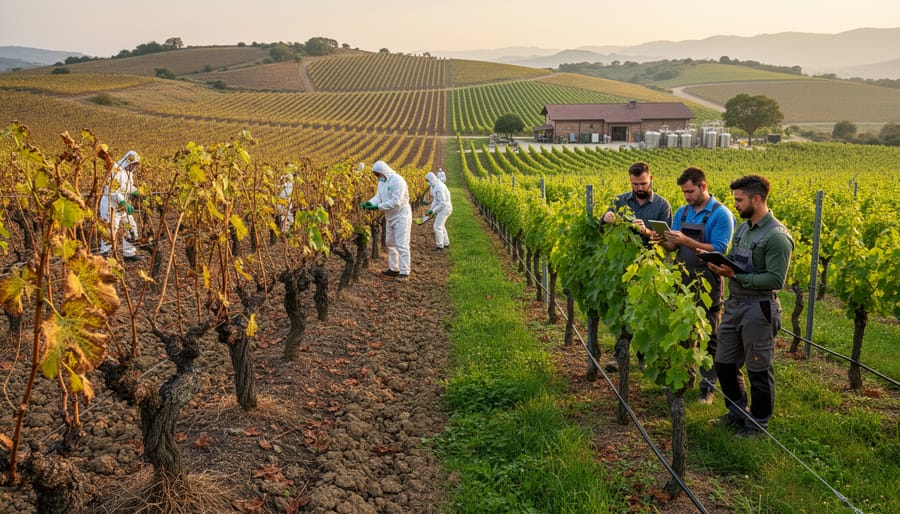
Every vine planted in a modern vineyard stands on American roots, a living legacy of the most catastrophic crisis in wine history. In the 1860s, a microscopic aphid called phylloxera vastatrix arrived in Europe from North America, clinging to imported vines. What followed was viticultural apocalypse.
The pest attacked vine roots with devastating efficiency. It spread from England to France’s Loire Valley by 1863, reached Bordeaux by 1869, and swept through Burgundy, Champagne, and eventually every wine region across Europe. By the 1890s, phylloxera had destroyed roughly two-thirds of European vineyards. Entire wine economies collapsed. Ancient vineyards that had produced wine since Roman times were reduced to barren fields. France alone lost over 2.5 million hectares of vines.
Desperate vintners tried everything: flooding fields, injecting carbon bisulfide into soil, even burying live toads among the vines. Nothing worked. The solution came from an ironic source, American grapevines had evolved alongside phylloxera and developed natural resistance. French viticulturist Jules-Émile Planchon recognized that grafting European Vitis vinifera onto American rootstock could save the industry.
The wine world resisted at first. Grafting seemed like surrendering centuries of viticultural purity. But survival demanded adaptation. By the early 1900s, grafted vines became standard practice. This reinvention transformed global viticulture permanently. Today, nearly every wine grape worldwide grows on American rootstock, from Napa to Tuscany to Barossa Valley.
Phylloxera didn’t just reshape how we grow wine, it proved wine’s resilience. The crisis forced innovation in rootstock selection, clonal research, and vineyard management that continues advancing the industry. When you hold a glass today, you’re tasting both catastrophe and triumph.
The 20th century transformed wine from an artisan tradition into a regulated industry, and that shift began with France’s Appellation d’Origine Contrôlée (AOC) system in 1935. Faced with widespread fraud and plummeting wine quality during the interwar years, French authorities codified what vignerons had understood for centuries: that specific places produce distinct wines. The AOC didn’t invent terroir, it protected it legally. By defining precise boundaries, permitted grape varieties, pruning methods, and maximum yields for each region, France turned cultural knowledge into enforceable standards.
Other European nations followed this template. Italy established its Denominazione di Origine Controllata (DOC) in 1963, later adding the stricter DOCG tier for premium regions like Barolo and Brunello di Montalcino. Spain launched its Denominación de Origen (DO) system, while Germany developed its own tiered approach focused on ripeness levels. The Americans took a different path with the American Viticultural Area (AVA) system starting in 1980, defining regions by geography and climate rather than prescribing winemaking methods.
| Classification System | Country | Year Established | Key Principle |
|---|---|---|---|
| AOC | France | 1935 | Strict terroir rules, grape varieties, production methods |
| DOC/DOCG | Italy | 1963/1980 | Quality tiers with increasing regulations |
| DO | Spain | 1932 | Regional protection with aging requirements |
| AVA | United States | 1980 | Geographic boundaries only, no style mandates |
These systems matter because they’re historical documents written on labels. When you see “Châteauneuf-du-Pape AOC,” you’re reading rules that preserve 700 years of papal winemaking. Understanding classifications helps you decode quality expectations and regional character before opening the bottle.
Critics argue that rigid regulations can stifle innovation and conflict with modern priorities like wine sustainability. Some progressive winemakers choose to declassify their wines rather than abandon sustainable viticulture practices that fall outside traditional rules. The tension between protecting heritage and embracing change continues to shape how we classify wine today.
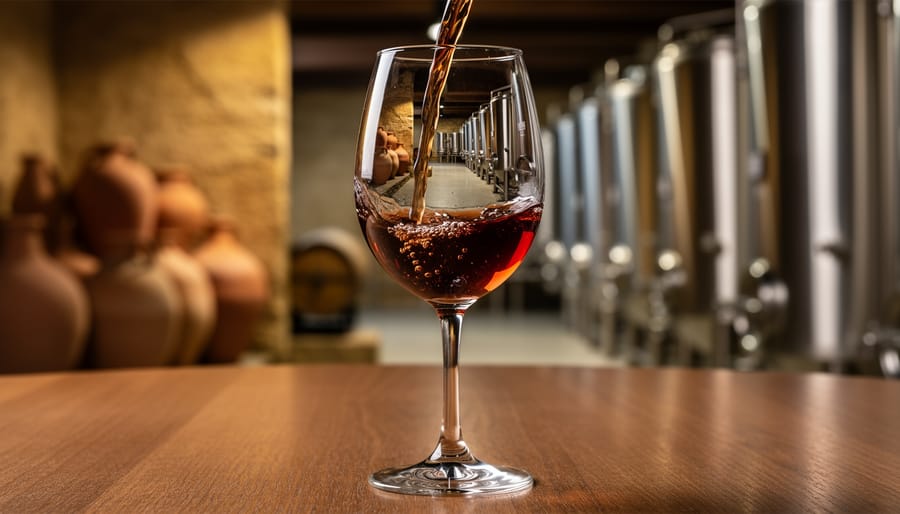
The 1976 Judgment of Paris shattered centuries of European wine dominance in a single blind tasting. When California Cabernets and Chardonnays outscored prestigious French bottles before a panel of French judges, the result sent shockwaves through the wine world. This wasn’t just an upset; it marked the moment New World wines claimed legitimacy on the global stage. Suddenly, regions without centuries of tradition proved that quality stemmed from technique and terroir understanding, not pedigree alone.
This pivotal event accelerated transformations already underway. Australian winemakers were experimenting with temperature-controlled fermentation, allowing precise flavor manipulation impossible in traditional cellars. Stainless steel tanks replaced ancient oak for certain styles. Reverse osmosis, micro-oxygenation, and laboratory yeast strains gave winemakers unprecedented control over the final product. Technology democratized quality winemaking, enabling smaller producers to achieve consistency once reserved for grand estates.
Yet as technology advanced, a countermovement emerged. The natural wine revolution of the 1990s and 2000s rejected intervention, returning to spontaneous fermentation, minimal sulfites, and hands-off approaches reminiscent of ancient Georgian methods. These wines taste different, sometimes challenging, but they represent a philosophical stance: wine as agricultural product rather than manufactured commodity. By 2026, natural wines occupy a significant market segment, proving consumers value authenticity alongside precision.
Climate change now drives the most consequential shift since phylloxera. Traditional regions face rising temperatures that threaten classic styles. Champagne harvests grapes weeks earlier than historical norms. English sparkling wines thrive where cool-climate viticulture once seemed impossible. Winemakers invest heavily in climate adaptation strategies, from drought-resistant rootstocks to exploring higher elevations and latitudes. Some Burgundy producers quietly purchase land in England and southern Sweden, hedging against an uncertain future.
These modern revolutions share a common thread with wine’s ancient history: adaptation ensures survival. Today’s innovations become tomorrow’s traditions, continuing wine’s 8,000-year evolution.
When you swirl a glass of Burgundy Pinot Noir, you’re not just tasting wine, you’re experiencing the culmination of Cistercian monks’ meticulous terroir mapping from the 1100s. Historical knowledge transforms passive drinking into active dialogue with centuries of winemaking wisdom. Understanding why Champagne developed its signature bubbles (cold cellars that halted fermentation, later resumed in spring) makes each sip a conversation with 17th-century cellar masters who initially saw those bubbles as flaws.
Recognizing ancient techniques in modern bottles adds layers to your enjoyment. When you encounter an amber-hued skin-contact wine, you’re tasting the same extended maceration methods Georgian winemakers perfected 8,000 years ago in qvevri. That funky natural wine with minimal intervention? It connects directly to pre-industrial practices before commercial yeasts and temperature control became standard. Even practical knowledge enhances appreciation, knowing the white wine substitutes or techniques for cooking with wine carries forward the ancient Roman tradition of using wine as both beverage and culinary ingredient.
Historical context explains regional excellence with specific grapes. Sangiovese thrives in Tuscany not by accident but through centuries of selection pressure matching vine to volcanic soils and Mediterranean climate. Riesling dominates Germany’s steep slate slopes because monks identified this pairing through generations of observation, not modern marketing.
Apply this knowledge during tastings by asking yourself:
Wine becomes living history when you understand its roots. That bottle isn’t just fermented grape juice, it’s the legacy of Roman amphorae networks, phylloxera survivors grafted onto American roots, and countless generations refining their craft.
Every time you pour a glass, you’re holding the culmination of 8,000 years of human ingenuity, cultural exchange, and careful observation. The wine in your glass carries DNA from ancient Georgian qvevri, Roman amphorae, medieval monastery cellars, and countless vineyards that survived phylloxera’s devastation. Understanding this deep history transforms wine from a simple beverage into a conversation with the past.
When you know that Burgundy’s climats emerged from Cistercian monks mapping subtle soil differences, or that California’s vines grow on French rootstock grafted after a 19th-century crisis, each sip gains new dimension. You taste not just fruit and oak, but the accumulated wisdom of generations who refined techniques, identified exceptional terroirs, and preserved winemaking through wars, plagues, and climate shifts.
Start exploring wines with historical curiosity. Ask about the traditions behind natural winemaking methods, research why certain grapes thrive in specific regions, and recognize the global connections that shape modern bottles. Wine appreciation deepens when you understand the stories behind what you’re drinking. Every bottle is a living artifact, and knowing its history makes you part of that continuing story.