

French wine is wine made in France under a system that names the place first and the grape second. Where a bottle comes from, whether Burgundy, Bordeaux, or the Rhône, tells you what’s inside because each region has legal rules about which grapes can be grown, how they’re farmed, and how the wine is made. That’s the opposite of most New World labels, which lead with a grape like Chardonnay or Cabernet Sauvignon.
It sounds like a puzzle at first. Why does a red Burgundy never mention Pinot Noir? Why does “Chablis” appear in big letters while the grape appears nowhere? Once you know the logic, the labels start doing the explaining for you. A bottle from Sancerre is Sauvignon Blanc, crisp and mineral. A bottle from Pomerol is Merlot-led, plush and round. The name is the shorthand.
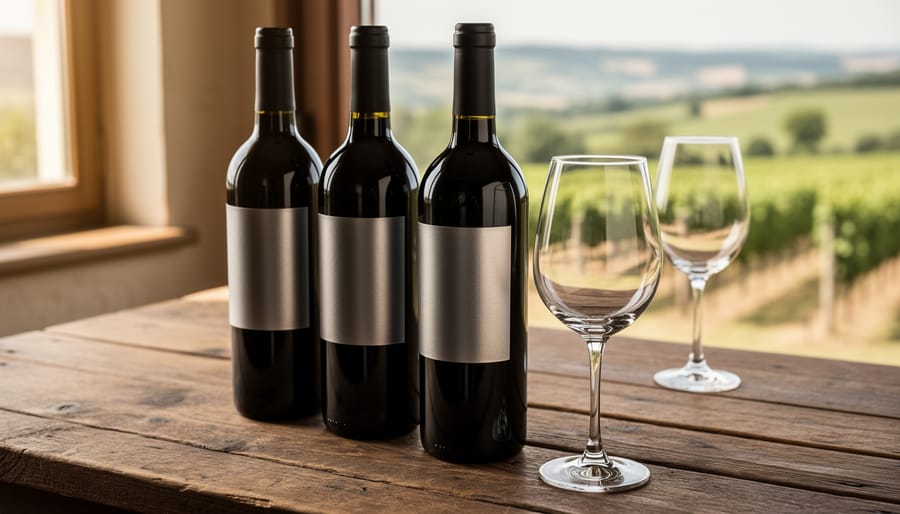
I remember my first real conversation with a sommelier in Lyon, who handed me a glass and asked me to guess before she showed me the label. I was hopeless. Then she explained the region, and suddenly every sip made sense. That’s what this guide aims to give you: a clear foundation in how French wine is made and organized, the main regional styles, and practical ways to buy, serve, and pair it with confidence.
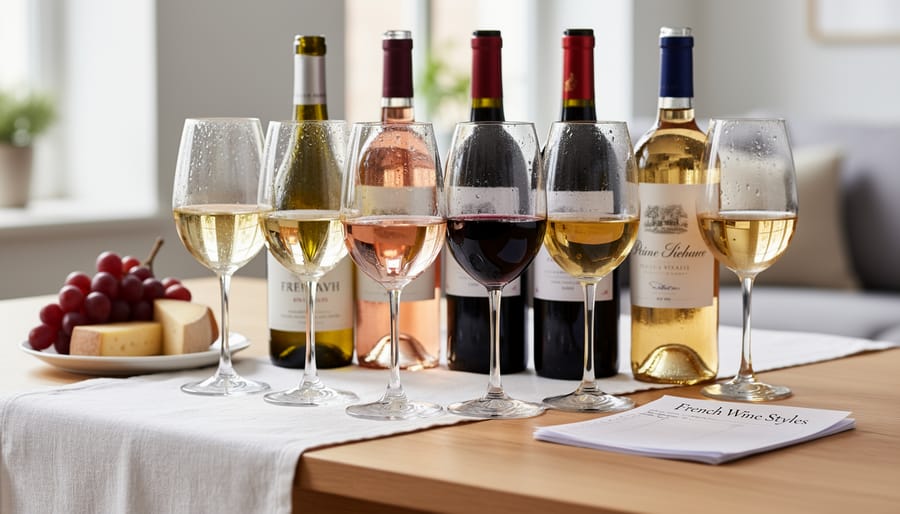
French wine is, quite simply, wine made from grapes grown and fermented in France. But the more useful thing to know is how it’s identified. Most French bottles are named for a place, a region, a village, sometimes a single hillside, rather than for the grape inside. Where a New World label might shout “Chardonnay” or “Merlot,” a French one often says “Chablis” or “Pomerol” and trusts you to know the rest.
That habit comes from a long-held belief that the place matters more than the grape. The word that captures it is terroir: the combined effect of soil, climate, and landscape on a vine, including things like slope, drainage, and exposure to sun. Two growers can plant the same grape a few hundred miles apart and end up with noticeably different wines, because the land and weather shape how the fruit ripens and what flavors it carries.
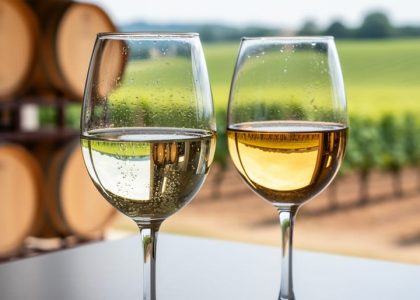
I saw this firsthand at a tasting where we poured two Chardonnays side by side, one from Chablis and one from the Mâconnais, both in Burgundy but a short drive apart. The Chablis was lean and crisp, with a mineral edge and bright green apple. The Mâconnais wine was rounder and riper, with softer stone-fruit notes. Same grape, different ground, and you could taste it. That moment made the French logic click for me: the grape is one ingredient, but the place is the author.
Once you accept that idea, French labels start to feel less like riddles and more like maps.
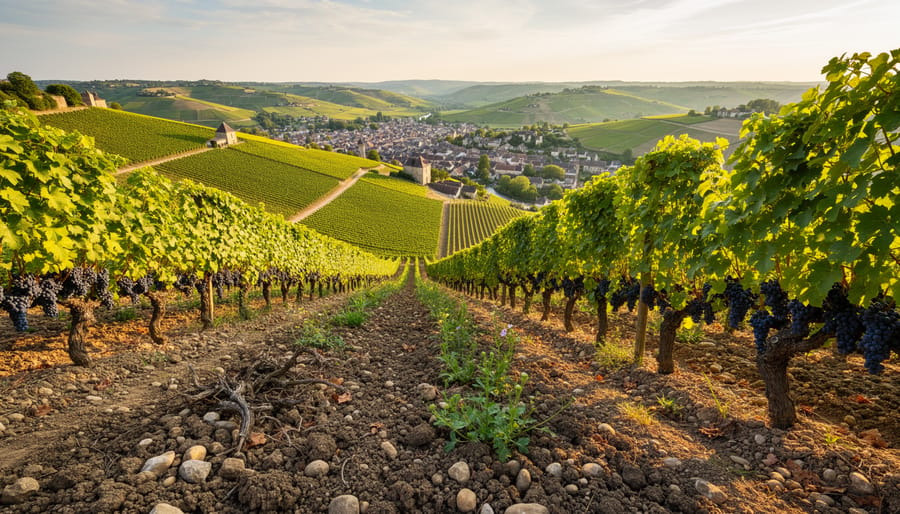
Everything in a French bottle starts with a simple question: how ripe did the grapes get? Climate answers it. In cooler northern regions like Champagne, the Loire, and Alsace, grapes struggle to ripen fully, so they keep bright acidity and lower sugar. The wines tend to taste crisp, light, and lean. Head south to the Rhône or Languedoc, where summers run long and warm, and grapes build more sugar and softer acidity, giving riper, fuller, rounder wines.
Site matters too. A south-facing slope catches more sun, a nearby river can moderate temperatures, and well-drained soil pushes vines to dig deep. Two vineyards a short walk apart can behave quite differently.
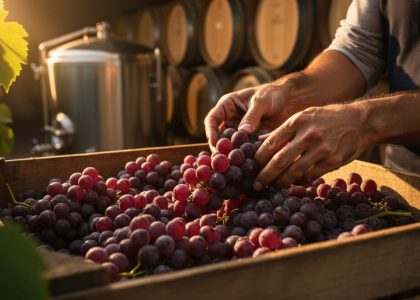
Then comes harvest, the decision growers sweat over. Pick early and you preserve freshness; wait longer and you gain ripeness and richness, but risk losing acidity or catching bad weather. Getting that timing right shapes the style before the grapes ever reach the cellar.
Once the grapes are in, fermentation does the heavy lifting. Yeast eats the sugar in the juice and turns it into alcohol, and for reds the skins stay in contact with the juice to give colour and tannin, the grippy, drying texture you feel on your gums. Many reds and some whites also go through malolactic fermentation, where sharper malic acid softens into creamier lactic acid. It’s a big part of why a French Chardonnay can taste rounder than a zippy, unoaked one.
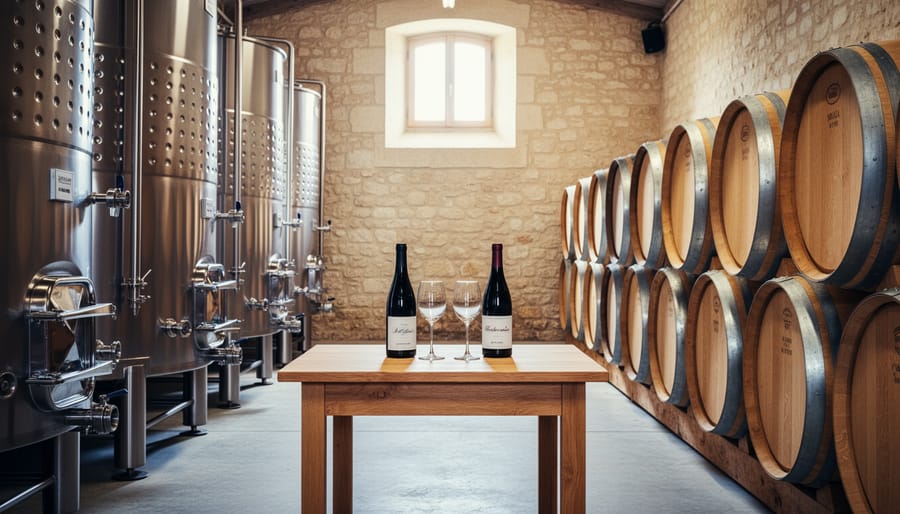
Aging is where style gets shaped. Stainless steel keeps wine fresh, fruity, and clean, which suits crisp whites and lighter reds. Oak barrels let a little oxygen in and can add notes of vanilla, spice, or toast, especially when the barrels are new. Older, used barrels are gentler and mostly add texture. Burgundy often leans on oak for its Chardonnay and Pinot Noir, while a Loire white may skip it entirely to showcase brightness.
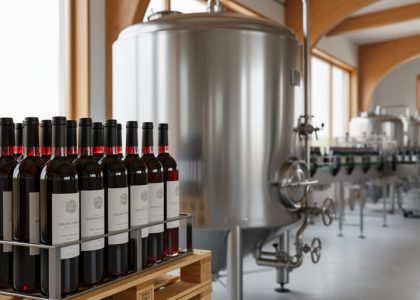
Then comes blending, the quiet art behind many famous bottles. Bordeaux and the Rhône typically combine several grapes so each can fill a gap: one adds structure, another fruit, another perfume. Burgundy takes the opposite route, bottling a single grape and letting the vineyard speak. Neither approach is better, just different philosophies. Understanding these choices is easier once you see how commercial winemaking works at scale, and how individual winemaker decisions about vessels and blends change what ends up in your glass.
France is easiest to learn one region at a time, because each one has a recognizable personality. Here is a quick tour of the eight you will meet most often.
Bordeaux, in the southwest, is known for red blends built around Cabernet Sauvignon and Merlot. Expect structure, firm tannins, and flavors of dark fruit and cedar. Burgundy, further east, takes the opposite approach and focuses on single grapes: Pinot Noir for reds and Chardonnay for whites. The reds are lighter in color but layered and earthy, while the whites range from crisp and mineral to rich and creamy.
Champagne, in the cool north, is the home of sparkling wine made mostly from Chardonnay, Pinot Noir, and Pinot Meunier. Its high acidity gives it that fresh, lively edge. The Loire Valley stretches along a long river and is best known for bright, zesty whites such as Sauvignon Blanc (in Sancerre) and Chenin Blanc (in Vouvray), plus lighter reds from Cabernet Franc.
In the Rhône Valley, the north produces peppery Syrah, while the warmer south blends Grenache, Syrah, and Mourvèdre into generous, spicy reds. Alsace, tucked against the German border, makes aromatic whites like Riesling, Gewürztraminer, and Pinot Gris, and it is one of the few French regions that puts the grape name right on the label. Many of these wines are fermented fully dry, which is a good moment to understand what dry means in a glass, since some Alsace bottles taste fruity without being sweet.
Languedoc-Roussillon, along the Mediterranean, is a huge, sun-soaked area producing everyday reds, whites, and rosés from grapes like Grenache, Carignan, and Syrah. It is known for value and variety. Provence, closer to the coast, is famous for pale, dry rosé that is crisp, dry, and wonderfully easy to drink on a warm afternoon.
A friendly note for beginners: start where the wines are approachable and the labels are forgiving. Alsace is a gentle first stop because the grape is named, so you can taste a familiar variety like Riesling and learn how French style shapes it. The Loire Valley is another easy win, with fresh, food-friendly whites that do not demand patience. Provence rosé and Languedoc blends are relaxed, affordable ways to get comfortable before you tackle the more complex bottles of Bordeaux and Burgundy.
I like to tell new learners to pick one region, taste a few wines from it over a couple of weeks, and notice what stays consistent. That repetition teaches you more than any chart ever could.
Not long ago, I stood in a wine shop staring at a Burgundy bottle that seemed to be written in code. No grape on the front, just a village name, the word “Premier Cru,” and a producer I’d never heard of. I almost put it back. Then the shopkeeper pointed out the three clues that mattered, and the label suddenly made sense.
Here’s the key idea: French labels tell you where a wine comes from, not what grape is inside. That’s because the place itself is the guarantee. A protected designation, called an appellation, means the grapes came from a defined area and were made according to local rules covering things like permitted grapes, yields, and aging. So a bottle labeled “Chablis” is Chardonnay, but the label assumes you know that. Once you learn what each region typically grows, the grape becomes something you can read between the lines.
The wording on the label also tells you how strict those rules are. These are the terms you’ll see most often:
One more word you’ll spot is “Cuvée,” which usually refers to a particular blend or batch a producer has chosen to bottle together. It’s a useful hint that the winemaker made a deliberate selection, though the term isn’t tightly regulated outside Champagne.
Back in that shop, my Burgundy bottle finally decoded itself: a village appellation, a Premier Cru vineyard, and a Domaine producer. That told me it was a single-grape wine from a respected site, made by an estate that grows its own fruit. Once you know where to look, a French label stops being intimidating and starts being a map.
Choosing your first French bottle doesn’t need to feel like an exam. The easiest approach is to pick one region and stay with it for a few bottles, so you can taste how that place expresses itself. A shop staffer will happily point you to something approachable if you tell them what you’ll be eating.
Here are a few starter tips that work almost anywhere:
Temperature matters more than most beginners expect. A red served too warm tastes flabby and boozy, so twenty minutes in the fridge before dinner can work wonders. A white pulled straight from a very cold fridge, on the other hand, tastes muted, so let it sit out for a few minutes. For glassware, you don’t need a different glass for every region. A medium tulip-shaped glass handles most wines, with a slightly wider bowl for fuller reds and a narrower flute or tulip for sparkling.
French food and wine grew up together, which is why regional pairings so often click. Rich, buttery Burgundy whites suit roast chicken and creamy sauces, while a crisp Alsace white handles pork and tangy cheeses. A Rhône red stands up nicely to hearty stews and grilled meats.
Wine earns its place in the kitchen too. Many classic French dishes, like coq au vin or a simple pan sauce, rely on it, and if you ever find yourself short, a few white wine substitutes can save the recipe. Still, nothing beats cooking with a bottle you’d happily drink.
Most beginner confusion about French wine comes down to a handful of questions, and the answers are simpler than they first appear. Here are the ones I hear most often when people start exploring.
Traditionally, French labels name the place, such as Chablis, Sancerre, or Pauillac, because rules for each area dictate which grapes may be used. Once you learn that Chablis is Chardonnay and Sancerre is Sauvignon Blanc, the place name tells you the grape and the style.
Not at all. Famous names from places like Burgundy and Champagne can command high prices, but regions such as Languedoc-Roussillon, the Loire, and parts of the Rhône offer plenty of approachable, everyday bottles. Exploring lesser-known appellations is one of the best ways to find value.
Champagne is sparkling wine made in the Champagne region of France under strict local rules, including a second fermentation in the bottle that creates the bubbles. Other sparkling wines may use different grapes, methods, or regions, which is why styles and flavors vary so widely.
The Loire Valley and Alsace are friendly starting points because their wines are often labeled clearly and offer fresh, easy-drinking styles. Provence rosé is another gentle introduction if you prefer something light.
One more question deserves a mention: does older French wine always taste better? It doesn’t. Most bottles are made to be enjoyed within a few years, and only certain structured wines reward long aging. Older isn’t automatically better, and a wine past its peak can taste faded rather than refined. When in doubt, ask a shop staffer whether a particular bottle is ready to drink now or built to wait, and let that guide your choice.
French wine makes sense once you hold onto three ideas. Place comes first: the village, valley, or hillside tells you more than the grape ever will. Production choices come second, from when the grapes are picked to whether the wine rests in oak or steel. The labeling system ties it together, turning a seemingly cryptic bottle into a short story about where it came from and how it was made.
You don’t need to learn everything at once. Pick a single region, say the Loire or the Rhône, and spend a few weeks tasting your way through it. Notice what repeats, what surprises you, and what you’d happily buy again. Each bottle teaches you something about the next one.
If you’d like a little guidance along the way, Wine Islands offers beginner guides and online courses to help you build that confidence step by step. Then pour a glass, slow down, and taste with curiosity. That’s where French wine really begins.