
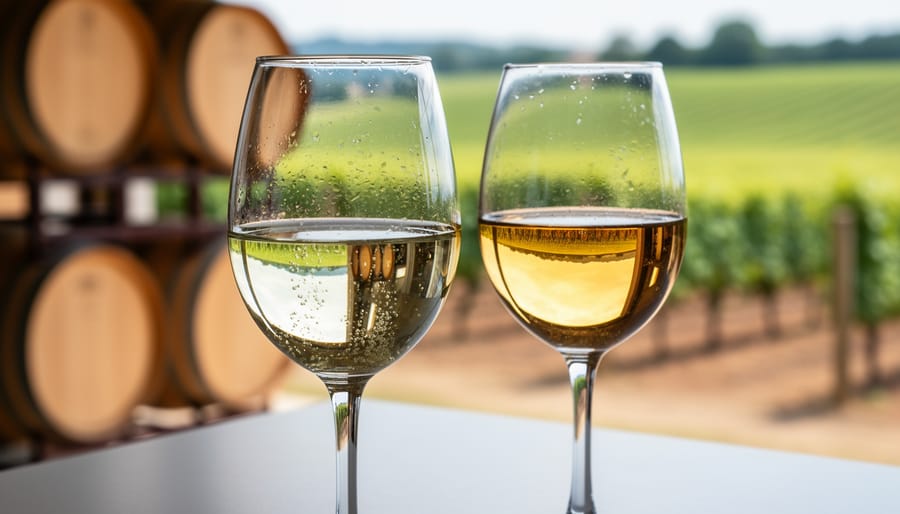
Acidity in wine refers to the crisp, tart sensation you feel on the sides of your tongue, produced by naturally occurring acids like tartaric, malic, and citric that come from the grapes themselves. It’s one of the fundamental building blocks of every wine you pour, working alongside tannins, sweetness, and alcohol to create structure and balance in the glass.
Without acidity, wine would taste flat and flabby, like orange juice left out overnight. Think of it as the spine that holds everything together. High-acid wines wake up your palate with bright, refreshing qualities that make you want another sip. Low-acid wines feel softer and rounder, though sometimes they lack the energy that makes wine exciting.
Understanding acidity transforms how you taste and pair wine. That mouthwatering zing in Champagne or Sauvignon Blanc? Acidity. The reason Chablis cuts through oysters like a dream? Same reason. Throughout wine history winemakers have prized acid levels because they signal whether grapes were picked at the right moment and whether the wine will improve with cellaring or should be enjoyed young.
This guide breaks down what acidity actually does inside the bottle and on your palate, which types of acids shape different wine styles, and how to use your understanding of acidity to choose wines that match your taste and pair beautifully with food. You’ll learn to spot high-acid wines by region and grape variety, and why some wines need more acidity than others to taste their best.
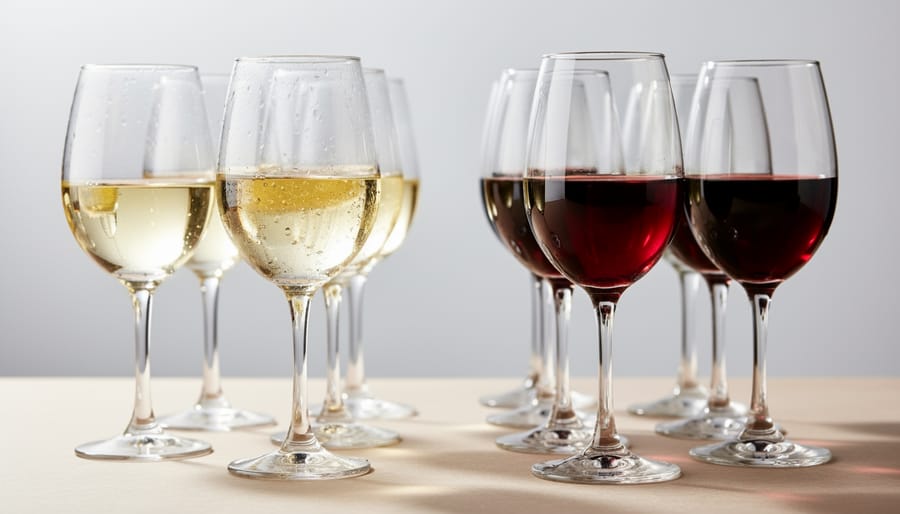
When you swirl a glass of wine and take that first sip, the mouth-watering zing that makes your cheeks tingle and your tongue come alive, that’s acidity at work. In wine terms, acidity refers to the naturally occurring organic acids present in grapes and preserved or modified during winemaking. These acids give wine its freshness, lift, and structure, preventing it from tasting flat or syrupy.
Wine acidity sits on the pH scale, which measures how acidic or alkaline a liquid is. Most wines fall between 3.0 and 4.0 pH, more acidic than coffee but less so than lemon juice. A lower pH means higher acidity and a sharper, more refreshing taste. But pH is only part of the story. Winemakers also measure titratable acidity (TA), which accounts for the total concentration of acids in the wine, giving a fuller picture of how tart the wine will taste.
To grasp the key concepts, here are the essential terms:
Unlike the acidity in vinegar or citrus juice, wine acidity comes primarily from grapes themselves, tartaric and malic acids develop as the fruit ripens. When you taste wine, acidity registers along the sides of your tongue and triggers salivation, creating that clean, refreshing finish that makes you want another sip. High-acid wines feel vibrant and electric; low-acid wines taste rounder and softer. Neither is inherently better, it’s all about balance and what the wine is trying to achieve.
When you sip a crisp Riesling or tart Sauvignon Blanc, that mouthwatering sensation comes from organic acids interacting directly with taste receptors on your tongue. These acids, primarily tartaric and malic, trigger ion channels in your taste buds, sending signals to your brain that register as sourness or tartness. The effect is immediate and unmistakable: your mouth waters, your palate feels refreshed, and the wine seems to lift rather than sit heavy.
Wine acidity is measured on the pH scale, where most wines fall between 3.0 and 4.0. For context, lemon juice sits around 2.0, while water is neutral at 7.0. A wine with a pH of 3.2 contains more hydrogen ions and tastes sharper than one at 3.8, which feels rounder and softer. Lower pH also helps preserve wine and intensify color in reds.
Here’s where it gets interesting: measured acidity and perceived acidity don’t always match. A wine can have high total acidity by the numbers but taste smooth if it has enough sweetness or alcohol to mask the tartness. Conversely, a bone-dry wine with moderate acidity might feel bracingly tart because nothing softens the impact. Your sensory experience depends on the complete picture, not just the lab report.
Acidity acts like a wine’s spine, holding everything else upright. Without enough of it, even wines with ripe fruit and fine tannins collapse into a flat, formless puddle on your palate.
Think of acidity and sweetness as natural counterweights. A sweet wine without sufficient acid tastes cloying, like syrup, but add bright acidity and suddenly the fruit comes alive, balanced, refreshing, alive. German Rieslings demonstrate this beautifully: residual sugar that would otherwise feel heavy gets lifted by razor-sharp tartness, creating a wine that dances rather than sits.
With red wines, acidity performs a different magic. It integrates tannins, making them feel silkier and less astringent. Pour a Barolo with its muscular tannins alongside a flabby, low-acid red, and you’ll taste the difference immediately. The Barolo’s acidity knits the grippy tannins into a cohesive structure; the other feels disjointed, even muddy.
Acidity also amplifies fruit. A high-acid Sauvignon Blanc doesn’t just taste citrusy, the acidity makes those grapefruit and lime notes pop forward, vivid and defined. Lower the acid, and the same fruit flavors blur and fade.
This balancing act explains why great wines feel complete rather than one-dimensional. Acidity doesn’t dominate; it orchestrates.
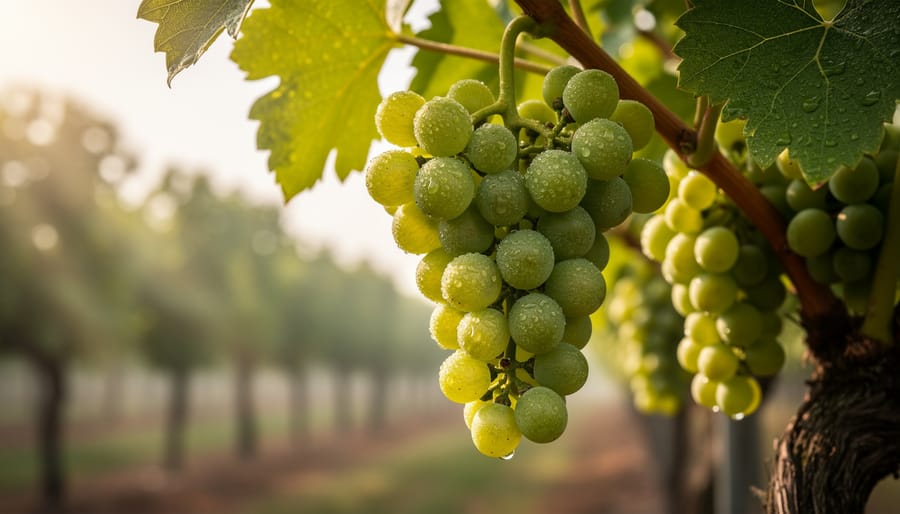
Tartaric acid is the workhorse of wine acidity. It’s the most abundant acid in grapes, often making up 50-70% of a wine’s total acidity, and unlike malic acid, it remains stable throughout fermentation and aging. This stability is what gives wine its structural integrity over time.
When you taste that clean, crisp tartness in a fresh Riesling or unoaked Chardonnay, you’re experiencing tartaric acid at work. It doesn’t break down or soften much as wine ages, which is why it’s crucial for wines built to last decades. In fact, those crystalline deposits you sometimes see on corks or at the bottom of bottles? Those are harmless tartrate crystals, essentially precipitated tartaric acid. Winemakers value this acid because it maintains a wine’s brightness and prevents the dull, flabby character that can develop when acidity drops too low.
Malic acid delivers the sharp, mouth-puckering tartness reminiscent of biting into a green apple. This organic acid is naturally abundant in grapes grown in cooler climates, where slower ripening preserves higher malic acid levels. You’ll find pronounced malic character in wines from regions like Germany’s Mosel, northern France, and parts of New Zealand, varieties like Riesling and Sauvignon Blanc showcase its crisp, sometimes angular edge.
What makes malic acid particularly interesting is its transformability. During malolactic fermentation, bacteria convert malic acid into softer, creamier lactic acid, dramatically changing the wine’s profile. This process explains why some Chardonnays taste buttery and round while others remain bright and zesty. Winemakers in warmer regions often encourage this conversion to soften naturally high acidity, while cool-climate producers might block it to preserve that vibrant, fruit-forward character.
While tartaric and malic acids dominate the grape’s natural profile, three other acids play smaller yet meaningful roles in shaping a wine’s character.
Citric acid appears naturally in trace amounts but winemakers sometimes add it to boost freshness in warm-climate wines where acidity falls short. It contributes a subtle brightness without the sharpness of tartaric or malic acid, though most producers prefer tartaric additions because citric can encourage unwanted bacterial activity during aging.
Lactic acid emerges during malolactic fermentation when bacteria convert sharp malic acid into softer, creamier lactic acid, the same compound that gives yogurt its smooth tang. This transformation rounds out reds and produces the buttery, velvety texture prized in many Chardonnays.
Acetic acid forms naturally during fermentation in tiny quantities, adding complexity at low levels. But when production spirals out of control through oxygen exposure or bacterial contamination, it turns wine into vinegar. A faint whiff can suggest rusticity; anything more signals a flaw. These supporting acids work behind the scenes, fine-tuning balance and texture without stealing the spotlight.
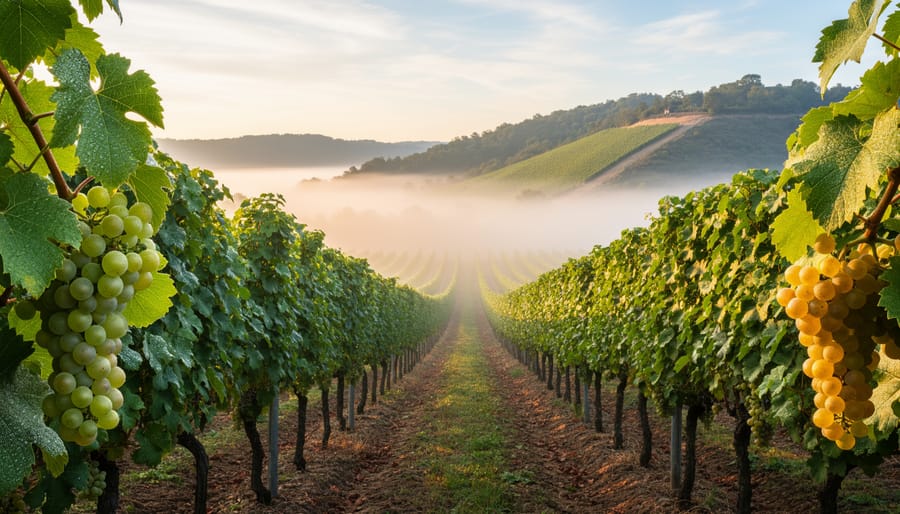
Grapes accumulate acids as they grow, but temperature dictates whether they keep them. Cool nights and moderate days slow down respiration, the process by which vines burn off organic acids for energy. In regions like Germany’s Mosel Valley, Burgundy, or New Zealand’s Marlborough, grapes retain high levels of tartaric and malic acid, producing wines with bracing crispness and a mouthwatering zing. Conversely, warm climates accelerate respiration. In Spain’s Priorat, California’s Central Valley, or Australia’s Barossa, grapes metabolize acids quickly during hot days, yielding softer, rounder wines with lower acidity and riper fruit flavors.
Altitude, sunlight intensity, and soil drainage further refine acid profiles. High-elevation vineyards in Argentina’s Mendoza or Italy’s Alto Adige experience cooler temperatures despite sunny days, preserving acidity while achieving full phenolic ripeness. Limestone and chalk soils, common in Champagne and Chablis, reflect sunlight and retain moisture, promoting slower ripening and sustained acid levels. Sandy or volcanic soils drain quickly, stressing vines in warm climates and sometimes concentrating acids alongside sugars.
Here are representative examples across the acidity spectrum:
Climate change is shifting these patterns. Warmer vintages in traditionally cool regions now produce wines with softer acidity, prompting winemakers to harvest earlier or explore higher altitudes. Practices tied to wine sustainability such as canopy management and cover cropping, help regulate vine temperature and preserve acidity even as global temperatures rise. Understanding these environmental forces reveals why a German Riesling tastes so different from a California Chardonnay, even when both are made from white grapes. Terroir is not just romantic abstraction, it is measurable chemistry written into every sip.
Malolactic fermentation, often shortened to MLF, transforms the tart malic acid naturally present in grapes into softer, creamier lactic acid. This process occurs when lactic acid bacteria convert the sharp, green-apple-like malic into the milder acid found in milk and yogurt, noticeably reducing the wine’s perceived acidity and adding a rounder, fuller mouthfeel. Virtually all red wines undergo MLF to soften their structure and integrate tannins, while many Chardonnays are put through it to develop that signature buttery, creamy texture with notes of brioche and vanilla. The transformation is one of the key winemaker techniques that define a wine’s final character. Some winemakers block MLF entirely in certain whites, like crisp Sauvignon Blanc or mineral-driven Chablis, to preserve their bright, zesty acidity. Others encourage partial MLF, blending treated and untreated lots to strike a balance between freshness and richness, giving the wine both vibrancy and textural depth.
Sometimes nature doesn’t deliver the acidity a winemaker needs. In warm regions where grapes ripen quickly and acids naturally drop, winmakers may add tartaric acid, a process called acidulation, to restore the wine’s structure and prevent it from tasting flat or overly soft. This adjustment is legal in many wine regions and carefully calibrated to mimic what cooler climates achieve naturally.
Conversely, in very cool vintages or high-latitude vineyards, grapes can retain too much malic acid, making the wine bracingly tart and unbalanced. Here, winemakers use deacidification techniques, typically adding calcium carbonate or potassium bicarbonate, which neutralize excess acid without stripping away the wine’s character. Shaping acidity through these interventions requires precision, overcorrection in either direction leaves the wine tasting manipulated rather than harmonious.
The goal isn’t to create a uniform style but to bring the wine into balance, letting terroir and varietal character shine. When done skillfully, you won’t taste the adjustment; you’ll simply experience a wine that feels right.
Understanding acidity transforms how you pair wine with food. High-acid wines refresh the palate after fatty or rich bites, cutting through butter, cream, and oil the way a squeeze of lemon brightens a dish. That tartness cleanses your mouth, preparing you for the next forkful and preventing flavors from building up and overwhelming your taste buds. Creamy Alfredo pasta, fried calamari, or a rich carbonara all benefit from a crisp Sauvignon Blanc or Champagne, the acidity slices through richness and keeps the pairing lively rather than heavy.
Acidity also balances salt and enhances bright, fresh flavors. Oysters, ceviche, and grilled fish shine alongside high-acid whites like Albariño or Chablis because the wine’s tartness mirrors the citrus or vinegar notes often served with seafood. When cooking, you can achieve similar brightness with a white wine substitute if you’re out of the real thing, but in pairing, the wine’s acidity is irreplaceable. Here are classic high-acid wine pairings to try:
Temperature matters, too. Serve white wines too warm and acidity feels flabby; too cold and it turns sharp and unpleasant. Aim for 45-50°F for crisp whites to showcase their refreshing tartness without numbing the palate.
Acidity also determines how well a wine ages. High-acid wines develop complexity over decades, their tartness acting as a preservative that slows oxidation and keeps flavors vibrant. Vintage Champagne, Riesling, and Barolo all rely on acidity to evolve gracefully, gaining nutty, honeyed, or savory notes while retaining structure. Low-acid wines fade faster, losing fruit and balance within a few years.
When you’re learning to identify acidity in wine, forget looking for it with your eyes or nose, this is all about the mouth. Pour yourself a glass and take a sip, letting the wine rest on your tongue for a moment before swallowing. High acidity announces itself with a tingling or prickling sensation, especially along the sides of your tongue and under your jaw. That’s where your salivary glands kick into gear. If you feel your mouth flooding with saliva, that mouthwatering response, you’ve found the acidity.
The sensation is similar to biting into a crisp green apple or squeezing lemon juice on your tongue. High-acid wines make your cheeks tingle and leave your palate feeling refreshed, almost scrubbed clean. They’re bright and lively in your mouth, never heavy or cloying. Low-acid wines, by contrast, feel softer, rounder, almost plush. They don’t make you salivate much, and the finish can seem shorter or less vibrant.
To train your palate, start with classic examples. Riesling from Germany’s Mosel Valley and Sancerre from France’s Loire Valley are textbook high-acid whites, they practically make you pucker. Albariño from Spain and Champagne also deliver that racy, mouthwatering zing. For high-acid reds, reach for Sangiovese from Chianti, Nebbiolo from Barolo, or a young Pinot Noir from Burgundy.
On the opposite end, try a Viognier from California or an oaked Chardonnay from a warm region, these whites feel fuller and less zippy. For reds, Malbec from Argentina, Grenache from warm parts of Spain, and ripe California Zinfandel typically show medium to low acidity. They’re fruitier, jammier, and lack that mouth-tingling sharpness.
Practice comparing two wines side by side. Notice how one makes you salivate more, how another feels heavier on your tongue. With repetition, spotting acidity becomes second nature, and you’ll start appreciating how this single element shapes your entire tasting experience.
High acidity isn’t inherently good or bad, it depends on balance and personal preference. Wines with vibrant acidity taste refreshing and lively, but if acidity overwhelms fruit or sweetness, the wine can seem harsh or thin. The best wines harmonize acidity with other components to create structure and elegance.
Yes, acidity can mask the perception of alcohol’s heat and weight. A high-acid wine often feels lighter and more refreshing on the palate, even at higher alcohol levels, because the tartness distracts from the warmth and viscosity that alcohol contributes.
Acidity itself doesn’t increase, but its perception shifts as the wine evolves. Tannins soften, fruit flavors mellow, and secondary aromas develop, making the acidity feel more prominent over time. Some acids, like tartaric, remain stable for decades, while others diminish slightly, but the overall acid backbone stays remarkably consistent in well-made wines.
White wines are typically made from grapes grown in cooler conditions or harvested earlier to preserve freshness, both of which retain more natural acidity. Red wines often undergo malolactic fermentation to soften their tannins, which also reduces perceived acidity by converting sharp malic acid into creamier lactic acid.
Chilling wine doesn’t add acidity, but it does sharpen how you perceive it. Cold temperatures heighten the sensation of tartness and crispness, which is why serving high-acid whites too warm can make them taste flabby, while serving low-acid reds too cold can make them seem lean and tart.
These questions come up constantly among wine learners, and they touch on a crucial point: acidity works differently for different people and contexts. What one taster finds bracingly fresh, another might find too sharp. Your own palate, the food you’re eating, even the temperature outside can shift how acidity registers.
One misconception worth clearing up is the idea that “crisp” always means “better.” Some wine styles, like aged Barolo or Southern Rhône reds, are deliberately lower in acidity, relying instead on fruit concentration, tannin, and alcohol for their structure. They’re not flawed; they’re built for a different purpose and a different kind of enjoyment. Understanding acidity means recognizing when it should shine and when it should step back, supporting rather than leading the wine’s character.
Acidity stands as one of wine’s most essential building blocks, shaping everything from the initial sip to the lingering finish. It’s the element that keeps a wine lively and food-friendly, prevents it from falling flat, and determines whether a bottle will age gracefully or fade quickly. Understanding acidity transforms how you taste wine, suddenly, that mouthwatering sensation after a crisp Riesling or the bright lift in a well-made Chianti makes sense.
The next time you pour a glass, pay attention to where you feel that tartness, how it interacts with the wine’s fruit and texture, and how it changes with different foods. Try a high-acid Sancerre alongside a low-acid Viognier to experience the contrast firsthand. Notice how climate, winemaking choices, and even grape variety all contribute to the acid profile.
Wine’s story is written in its acidity, from ancient winemakers who valued tartness as a preservative to modern vintners who carefully manage pH to craft balanced, expressive wines. By recognizing and appreciating this fundamental component, you’re not just tasting better; you’re connecting with centuries of tradition and the skilled craft behind every bottle.